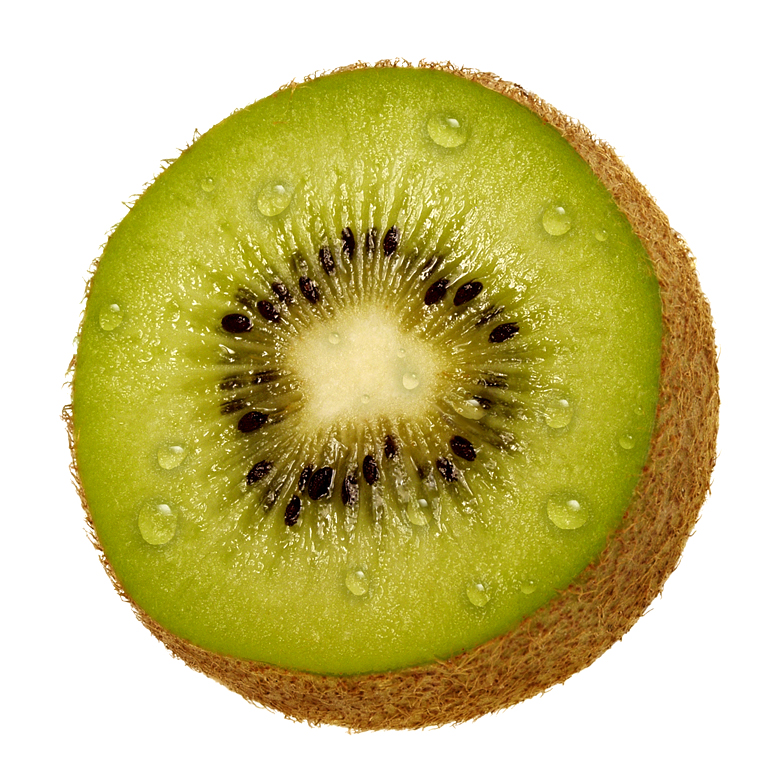
One kilo of kiwi fruit flown from New Zealand to Europe discharges 5kg of carbon into the atmosphere.
I don't know where that fact came from, but when I opened up my blog page it was written there, in black and white. (I'm serious!) Either I wrote it a long time ago and promptly forgot about it, someone managed to break into my website and fill it with kiwi tidbits, or some sort of nefarious kiwi-factiod internet bug has infiltrated the blogger software.
Regardless, it got me thinking about the burgeoning field of industrial ecology -- something that came up this week at school when I attended a lecture on measuring atmospheric carbon flows. Industrial ecology is the study of economic products as environmentally developed. In other words, there's a science to determining all the inputs and outputs that stem from a trade, production, and consumption. It's a way to integrate economic models with ecological theory, and it certainly seems like a good idea at this point in our global development.
But it's more difficult than it seems. How do you determine the (industrial) carbon impact of a given product? What is the true cost of a kiwi?
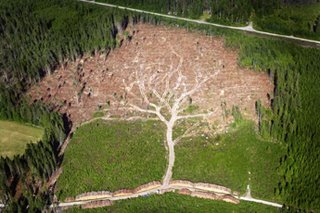
Carbon weight is a problem of scale. It seems self-evident that you include the carbon cost of transporting the kiwi from New Zealand to market. But what about the carbon cost of the machines used by workers who pick the kiwis? What about the cars driven by the workers who pick the kiwis as they commute? What about the carbon emitted by the factories that built the cars that the kiwi-picking workers drive? What about the cars driven by the car factory workers, and all the costs of transporting materials to and from that factory? A kiwi's carbon footprint can get almost infinitely large, as we include more and more levels of industrial impact. There's a science to this, but its not pretty, and its certainly not as clear cut as freshly-logged federal forest land.
I have a friend who has been going around the country on what he calls a
Zero Emissions Road Trip. He's trying to offset his carbon emissions from travel and consumption by negotiated improvements in carbon usage from people he meets. The only problem is that he, too, is beset by the difficulty of determining his true carbon footprint. Where do you draw the line? How many scalar orders of carbon do you include?
The science of climate change, and industrial ecology, are complicated solutions to our increasingly complicated economic and enviornmental problems -- the era of simple solutions is behind us.
Update:The thought just occurred to me... What if we had a website where people could post their carbon relationships to kiwi fruit, moderate others' relationships and carbon connections, and negotiated a quasi-public understanding of the imapact of a single kiwi fruit on the earth.
Well? We could call it:
Wiki-Kiwi!
 This old building is on the 500 block of Marquette Avenue, right in the heart of the central business district. It's a nice pre-war industrial building, with street-level storefront space, and a entranceway bordered with engraved heiroglyphs. At some point, though, the building was gutted and filled in with a parking ramp, so that now when you walk down Marquette you stroll past this Egyptian doorway leading to a concrete carpark.