Showing posts sorted by date for query Jefferson Bike boulevard. Sort by relevance Show all posts

2025-07-28

Dedicated Bike Funding Remains Minuscule

[The $1M Jefferson Avenue bicycle boulevard as it passes an elementary school. You're welcome to complain about bike lanes if your complaint is that they are not good enough. The only trace of the bike boulevard is the tiny green sign next to the stoplight.]

For some reason, bicycles and bike lanes cause drivers to lose their minds. There are a lot of reasons for this, most having to do with what I call the "windshield perspective", the way in which many people are unable to view a city street from outside an isolating motor vehicle. There are way too many examples to list -- see the latest Evan Ramstad column -- but the recent, welcome Minnpost piece about a Star Tribune op-ed is an attempt at a corrective that, if anything, actually understates its case! 

Cities and counties rarely have meaningful capital funding specifically dedicated to for bicycle projects. As Keefer points out, the amount of money is small: around $2.5 million a year in Minneapolis, which laps all other Metro area cities in this regard. For capital costs, bicycle project funding is often pitted against other worthy causes like playgrounds, rec centers, fire stations, or bridges in disrepair. (Despite being the smallest costs, bike rarely do well in those scenarios.) 

[Transit funding, here dwarfed by highway funding, is far larger than bicycle infrastructure funding (as it should be). The 'MPO' dot here is the "regional solicitation" step I refer to.]

One of the few bike-specific funding steams that exist is part of the regional solicitation, unallocated Federal transportation dollars that are directed to MPOs. (See the Northeast Hennepin / 1st project I wrote about today at streets.mn for an example of this money at work. Even there, the bike lanes are part of larger pedestrian and transit improvements.) 

In the Twin Cities, our leaders decide to use some of that Federal money for bike-specific projects, while many other metro area do not. Most recently, there was $40 million for a two-year period divided amongst 11 projects in the seven-county metro, chosen out of 50 applications. (The list of winners appears below.) Meanwhile, other countries spend a billion dollars a year on bicycle infrastructure; most notably the Netherlands, where their national and local budgets include spending $1.2 billion over 7 years.  

[Here's the Federal/State bike-specific funding for the entire metro area for 2023-2024.]

A  detail at the end of the short piece illustrates this very well. Keefer writes:

Minneapolis has a robust bike infrastructure built out through city, state and federal initiatives. The city was one of four communities that received funding through the 2008 Federal Highway Administration’s Nonmotorized Transportation Pilot Program – a total amount of $25 million that was spent in the region over a 10-year period.  

I wrote my dissertation on this project. That amount of money, dedicated to bike infrastructure, was impossibly rare back when it arrived in 2005. That’s what made it so special and important; because the money was specifically for bicycle infrastructure (and nothing else) it allowed Minneapolis and a few other cities to begin bicycle planning and develop new treatments and designs. If the money had just been part of a larger transportation pot, as it almost always was before that point, bike infrastructure could have been watered down or folded into a highway or road expansion. 

[Here's what that $25M (over eight years) bought you in "Minneapolis Area" and four other cities.]

Bike infrastructure funding is a rounding error compared to even a minor highway project, let alone a major one. To offer an extreme example: at the most recent TAB meeting, someone mentioned that a proposed interchange at Highways 65 and 10 in Blaine will cost $250,000,000. That’s likely a low estimate; the cost could grow immensely. That fact that commentators, angry drivers, or columnists focus on bicycles as examples of wasteful spending is laughable.  

One further note:

Here is some data about the NTPP money from a post-mortem study that came out in 2014, showing where the money went. 

[The map of “Minneapolis” is particularly funny: it shows a large “bicycle boulevard” infrastructure project in St. Paul, for example, which was funded here along Jefferson Avenue, pictured at the top of this post. If you go there today, you’ll see almost no sign of the >$1 million bike infrastructure investment. In some places, you’ll see no sign of bike infrastructure at all!]

[Different cities spent the money in different ways.]


2020-03-20

Still Further Thoughts on Ayd Mill Road

[Ayd Mill drone shot!]
It might seem incongruous to write about Ayd Mill Road in these trying times, but now more than ever, this road continues to be a thorn in the side of the city of Saint Paul. The public meeting, the existence of which was an outcome of the heated conversation at City Council three weeks ago, was supposed to take place this week. In its place, we have a 30-minute youtube video from Public Works explaining a few things.

The point here, though, is that this moment of social distancing and quarantine is the PERFECT TIME to send in a thoughtful comment in support of progressive low-car / no-car changes to Ayd Mill Road. So take some time out of your humdrum working-from-home schedule, brush your cat off your keyboard, and comment today!

Obviously a lot has happened since I last wrote about this concrete quagmire, and how Saint Paul “fixes” this road has rightly faded into the background. But the road must go on, and public works is still going to spend its allocated budget this year on maintenance and construction. So I wanted to post an update with some of the new information I've learned since I last wrote about Ayd Mill Road.

But first, let's watch this informational video!


OK well. Here are my quick takaeaways from the presentation and survey:
  • It is very nice that "repaving the status quo", i.e. the initial Public Works / current CM Thao proposal, is not one of the options mentioned in the video. Indeed, it is not mentioned at all. 
  • The "timeline" of Ayd Mill Road really glosses over former Mayor Randy Kelly’s highly-controversial "test connection" back in 2003, which is a key reason we're in this mess today.
  • Wow those renderings are cheesy!
  • Why does the 3-lane option require fewer drainage improvements than the two-lane option? Inquiring minds want to know. I'd imagine the drainage issues would be the same, regardless.
  • What is the reason for the claim that the Jefferson ramp is a minor adjustment for one, but not the other? 
  • They talk about reconstruction as a cost driver, but don't mention the reason, which is the the turn lanes. I wonder what the range of possible stacking length for the turn lanes was, and how that might have affected costs for the two-lane option.
  • What is the design speed of the new road going to be? And what will be the posted speed of the new road? That seems super important because...
  • The video glosses over the safety issues. Decreasing speed should be a major goal of this project. And yet the focus here is  “separating” cars going each direction with a median? That's a key design feature if you have a high-speed road (>40mph, like it is now), but if you are designing a low-speed road (<30mph a="" bikes="" boulevard="" buffer="" case="" design="" don="" especially="" have="" if="" important="" in="" is="" li="" like="" lower="" median.="" mississippi="" nbsp="" nearby.="" need="" or="" pedestrians="" river="" safer.="" speed="" t="" than="" that="" the="" this="" two-lane="" with="" you="">
  • A quote here from the second presenter: “It stands to reason that the three-lane operates more efficiently than the two-lane.” ...hm, does it? I don't see why that would necessarily be true. If you create more crashes with a three-lane road due to weaving traffic and contrasting speeds, it is less efficient and less safe.
  • Finally, I hate to say this, but the survey is terrible. I've never seen a worse one from anyone other than a hack PR firm. 
So, yeah. Well at least this video and survey is still better than an in-person meeting about Ayd Mill Road would have been. I can only imagine how terrible that experience would be. The focus groups alone would have set a new state record for mansplaining.

The Big Picture on Ayd Mill Road

Since I last wrote about Ayd Mill Road, and expressed my opinion that the best option for the City of Saint Paul would be to remove it completely from the city-funded motor vehicle network, I've had a few in-depth conversations with folks close to the project, both within advocacy groups and within City Hall.

While my mind hasn't really changed, and I stand by most everything that I have previously written about this project, I do want to share a few things I've learned. Here are a few things that I've learned.

First, the concrete roadbed underneath the degrading is in better shape than people (and myself) had thought. That means that a mill and overlay will theoretically last longer than one might have initially expected (maybe 15-20 years instead of 7-10).

The caveat is that there’s a particular spot near Grand Avenue where there’s a natural spring (that presumably once fed Ayd Mill Creek). There, the city needs to do something -- re-grading, or installing a new drain -- that will cost at leastr  $1M. I'd imagine that, in any roadbed re-paving scenario, including re-paving the status quo, that would would have to happen to keep the project from quickly degrading.

That said, I imagine that with a theoretical park/trail-only option, this cost could be avoided. Or maybe, the money could be spent instead on rainwater or daylighting.)

Second, the main cost driver of the two-lane road option is installing turn lanes, which would require pouring new concrete to create enough stacking capacity to allow people to wait for the light before exiting.

(More on this in a moment.)

#3. Finally, the city’s process has been admittedly flawed, with some missed opportunities to communicate and/or come up with consistent options over the last year or so. It’s understandable, as Public Works projects are constantly evolving and often the timelines are improvised depending on what money and resources are available.

But, that said, the current proposal is better than a lot of other outcomes.

Ranking The Options

Speaking of which, here’s my ranking of the options that are currently on the table…

  • #4. The $4m four-lane status quo repaving — as I’ve said, this sucks.
  • #3. Doing nothing — Honestly, this could be great or terrible, depending on what ends up happening. If the city “kicked the can” once more and didn’t repave it this fall, likely the road would have to be shut down over the winter. At the very least, though, that would give people a chance to think through the situation more completely, as well as demonstrate what traffic impacts might look like.
  • #2. The $9m 2-lane option — this is the best outcome, but it’s just costs too much money. For example, $9m could get you a long way toward completing the Capital City Bikeway, which would have many times the benefits of the Ayd Mill Road connection for bicyclists and for the city's economy.
  • #1. The $7m 3-lane option — Well, it’s a compromise, and at least it’s a change that would finally eliminate any freeway-connection pipe dreams. That said, I find it hard to believe that the bike lane would be very pleasant or useful in the short term, but it's better than nothing.
But, I still feel that there are two options that are not on the table, and that’s frustrating. Here's one...
  • #?. Closing the road, building a recreational trail and fundraising for a park —  I’ve already written about this, as have others. If you ballpark $2m for the trail, this would truly be the best choice, but sadly many people in Saint Paul are yet not ready to create a future with fewer cars on the city streets.
And there's this, lingering around in my head...
  • #?. A cheaper 2-lane option, somewhere in the existing $7m range — I still think, stubbornly, that there should be a way to design a two-lane road that falls close to the consensus budgetary range for this project.

[The St. Clair intersection is pretty useless.]
One way to do this might be to eliminate one of the access points. The obvious choice here would be the St. Clair on- and off-ramps. For one thing, this entire road offers only marginal benefits to the transportation network, but that’s especially true for the St. Clair intersection, where they’re less than a mile (and a 2-minute drive) away from the nearest 35E on-ramps and even closer to the Jefferson ramp. Simply closing this intersection has to shave a million bucks off the project cost.

I’d also be really curious about pricing out intersection alternatives, like a roundabout. In theory, it could save money on traffic signals, decrease speeds, and reduce the need for any turn lanes.

Conclusions

In short, I wish the City could have done more to come up with a more affordable, less compromised plan. I’m sure the consultant did their best with a very limited budget and the set of scope parameters they were given, but there have to be more design choices out there that could provide a quality recreational trail at a reasonable price tag.

This is to say that I reluctantly support the existing compromise, but the takeaway for me is that it’s a shame that we can’t make better decisions with city money and on city-controlled projects. Saint Paul is hampered right now by its lack of resources, both being short on critical staff in Planning and Public Works, and with a lack of tax base and revenue more generally. With a project of this size and budget, with such long-term implications, and with so many ambitions and idealistic plans on the city's books, this three-lane compromise project, while better than the status quo, seems like a missed opportunity. If we really want to make meaningful changes to our city, we need to do better.

So, go forth and take the "survey". At the very least, when this passes, I'll never have to write about Ayd Mill Road again!

2017-10-16

Why I'm Supporting Melvin Carter for Saint Paul Mayor

[My view as an "undecided voter" at the Ward convention.]
Earlier this spring, when running for a delegate seat at the Saint Paul DFL City Convention, I was undecided about the mayor's race. This year’s mayoral election is important because, for the first time in a well over a decade, there’s a wide-open race for the mayor’s office. And unlike in Minneapolis, in Saint Paul the mayor’s office is by far the most important position in the city.

At the time, I was undecided. I was genuinely open to hearing from different candidates, and really did not want to see the DFL party endorsing a candidate in the spring. Instead, I wanted lots of information and a contested race. I wanted to watch the campaigns through the summer, and to understand more clearly the different stances that the candidates had on the issues.

To my relief, all of those things have happened and I got my wish. Barring any last-minute changes, here's my ballot. But before I get there, some context for this year's race.

Saint Paul’s political system

[The Council Chamber is not where the power is.]
For the most part, unlike our western neighbor, Saint Paul does not have a strong track record of explicitly radical politics. As Mary Lethert Wingerd lays out in her political / labor history of the Twin Cities, the model here has been one of compromise rather than confrontation. For generations, Saint Paul has gone the route of centrist liberalism, often aided by the Catholic church. Leaders have tried to mediate and mitigate political tensions like, for example, the one between labor and business. As a city, our most popular mayors have most been center-left business liberals, like Chris Coleman or George Latimer. In fact, rather than left-progressives in the Ellison/Wellstome mold, Saint Paul voters have been more likely to flirt with almost-extinct species of conservative urbanites like DINO mayors Norm Coleman and Randy Kelly (their Minneapolis equivalents would be Arne Carlson or Barb Johnson). A lot of that is because of low turnout and how campaign money operates, and for better or for worse, that’s been the way of city politics Saint Paul.

[Sadly for democracy, but happily for Coleman, the 2013 mayor's race was a farce.]
The city’s other big political hallmark is a “strong-mayor system” that dates back to the 1970s. Unlike Minneapolis’ dispersed (“thirteen mayors”) Council model, Saint Paul concentrates decision making and budget-setting power in one office. The next Mayor of Saint Paul, whoever it is, will have a by far the most influence over the city’s priorities, processes, and goals than anyone else.

There are good things and bad things about that system, and one of the most common complaints about Chris Coleman’s tenure as mayor has been a lack of transparency about big-ticket city decisions. Situations like the Saints stadium no-bid contract, the setting up of priorities during the city capital budget process (that often came at the expense of ward priorities), or the $40M+ “8-80” budget that included some real categorical stretches like the Palace Theater remodel.

Personally, I feel Coleman’s power of the purse has been used relatively well. The 8-80 projects, the Penfield, and the Palace theater renovation, for example, were all good investments. Likewise, the city’s two Chris Coleman-era stadium deals — the Saints and MN United — are vastly better than the ones in Minneapolis. Both might be as close as any Minnesota stadium project ever comes to “paying off,” in terms of economic development (which is to say, it’s all relative).

And unlike previous mayoral regimes, Coleman hasn’t wasted tons of money on doomed urban malls or big road expansions, and I give him props for doing things like trying — but badly failing! — to implement more parking meters and for trying — and probably succeeding — to organize garbage collection.

[CM Prince at a "Saint Paul Strong" meeting.]
Regardless of my take on it, there’s been a narrative bubbling under the surface of Saint Paul politics that city finances are falling apart because of waste or vague corruption, or that the city priorities are somehow skewed toward downtown business and away from geographically balanced and racially equitable investments.

If that’s the case, I’m not seeing it. Downtown is critical for the whole city, for example. And my take on tax-base problems are that we need to stem the continual leak of jobs (through downtown investment, among other things), that we have a lack of market-rate development, and that we still rely on fiscally-inefficient pro-sprawl policies. And, oh yeah, there’s the screw-up of the city’s street maintenance assessment system by some combination of it being a bad idea in the first place (thanks Randy Kelly!) and someone shrugging off an important law suit.

The key idea here: any Saint Paul mayor will be able make sweetheart back-room deals. That’s the nature of the system, and it’s going to be a problem in the city no matter who is elected. You hope for transparency and accountability and decentralization of decision making, but the entire system is set up to minimize those things.

Like I said, there are pros and cons to the strong mayor system, and for that reason, you hope that, whoever you elect, they're going to make smarter back-room deals than others.

Track records versus present-day stances
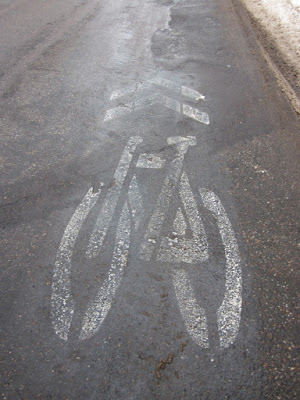

[Pat Harris' disappearing / re-appearing 2011 sharrow.]
The other thing that’s on the table here, at least with a few of the candidates, is that they previously served in office and have something of a record. The two front-runners, Pat Harris and Melvin Carter, both previously served on the City Council. Meanwhile, Dai Thao is currently on the council, and has recently taken a bunch of illuminating votes. How much weight do we give their track records versus what they are saying now on the campaign trail?

One thing to note: a lot has changed in Saint Paul over the last six years. For example, Harris was a Council Member in Highland for 12 years, ending in 2011 (replaced by CM Tolbert). So there’s a lot there.

The point is that I first encountered Harris when he was involved in the Jefferson Avenue bicycle debate. I remember him as the Council Member who ordered the city to remove sharrows from a repaving plan because they were a waste of money. (Scroll down to #5 on that link to read about it.) Harris was the Council Member during the entire Jefferson Bike boulevard debate (though not the final denouement). It turned into a bike planning fiasco, and today the once-ambitious project is an embarrassment to the city.

(A point in Harris’ favor: sharrows are not a big deal and do legitimately suck. But on the other hand, his rationale at the time was ridiculous and the position did not help one bit.)

Meanwhile, Carter’s track record on urban and equity issues isn’t entirely stellar. As former Council Candidate Jim Ivey is fond of reminding me on Twitter, both Harris and Carter voted to allow Cossetta’s to violate the city’s living wage ordinance back in 2011. And Carter scratched a traffic circle from the Griggs Bikeway before  eventually supporting it.

(Again, one-of-five traffic circles is hardly a big deal, and he ended up supporting the project. But still... must we?)

My point is that I prefer focusing on what the candidates are saying and doing now, rather than navel gazing at Council votes from the 2010s. Partly that's because there’s been a ton of progress on Saint Paul safe streets in the last seven years. In conversations with Harris today, and hearing him speak at events, he's changed his stance on street safety issues since the 2000s. The same is true for Carter and presumably some others. Meanwhile, Thao has the unfortunate position of actually being in office during an election year, and having to make tough-but-revealing decisions.

But most importantly, unlike previous Minneapolis and Saint Paul mayoral elections where there was either a total lack of opposition or an almost-total lack of daylight between nearly-identical candidates, in this race there are many important distinctions 

For example, here are four big issues for me: Ford site, living wage, public safety policy, and safe streets.

Four Key Issues


[Citizens giving CM Tolbert a spinal exam.]
Let’s take them one-by-one.

#1: Ford site / development

At first glance, using the contentious Ford site debate to evaluate different candidates seems a bit small-minded, like a single-issue voter who only cares about one particular crosswalk at one intersection.

But actually, as I tweeted a while back, the Ford debate combines a bunch of critical issues. It was a great test for a mayoral candidate because their positions revealed their character in action. Firstly, and probably most important, the different stances point to how much each candidate is willing to stand up to pressure brought by (in this case) a well-heeled group of wealthy homeowners. The Ford site is like a spinal exam.

That’s huge, because having a spine in the face of the city's unequal public engagement landscape will be be critically important as Saint Paul attempts to make some tough-but-necessary changes around things like sustainability, safety, and the precise meaning of the word “livable.”

Candidates’ Ford site stances also throw into relief a candidate’s trust in policy analyses, as well as their commitment to public process.  Both of those will also be critically important when it comes to ensuring the stability of Saint Paul’s tax-base, or not wasting thousands of hours of staff time on clearly lost causes. Meanwhile, there's an all-important need for more housing in the city, that's supported by reams of policy documents. The Ford site might be a “single issue,” but it’s one that brings together some of the most important policy threads dangling over Saint Paul right now.

#2: living wage

[Saint Paul wage flag.]
Especially in the Trump era, one where Minnesota teeters on the brink of a Scott Walker-esque state government that would wage all-out war on our cities, the living wage issue is a critical test of one’s political philosophy. Now that the mantle of progressivism has passed to the cities, passing a $15 city-wide wage practically the only thing anyone on the left can do to help working-class people. Supporting the effort, despite business pressure, is a clear sign of where one falls on the political spectrum. It also reveals a lot about how frustrated a candidate is with status-quo top-down liberalism, versus a commitment to grassroots organizing tactics that build on incremental results.

In Minneapolis, minimum wage stances have been a big differentiatior for the different Council and Mayoral candidates. The same should be true in Saint Paul, though the vote has not yet come to a head.

#3: race and policing

[Philando demonstration chalk on Summit Avenue last year.]
This is also critical. We have for far-too-long ignored the festering collision of race and policing in our cities. Over the last few years, as more and more innocent people have been killed by police, the Black Lives Matter movement and the ability of public safety institutions to deal with accountability have come to define urban political movements in US cities. This issue is not going away.

Minneapolis might have it worse, but this is still a big deal in Saint Paul, and anyone who thinks that the SPPD is immune to these kinds of shootings or frustrations is kidding themselves. The next mayor will be at the center of these tensions. Will they be able to do anything to help resolve them?

#4: safe streets

[We need a mayor who will fight the angry fliers.]
Finally, the reason I've been blogging for 12 years. My central issue is making sure the city does as much as it can to change the culture of our streets. This is a complex issue because, on the surface, all the candidates (and Saint Paul official policy) already say the right things. Everyone believes in safe streets and bicycling and healthy transportation.

(Well, everyone but Tom Goldstein.)

But that’s not the real problem in Saint Paul. What we need in this city is actual leadership on safe streets, because simply having a plan isn’t good enough. The next mayor will need to dedicate funding to bike projects, and stand up to bike lash and backlash from drivers in negotiation with the county.

That takes spine, tough accounting, and an understanding of the nuance of design tradeoffs. Even if someone says all the right things, it’s not a given that they’ll be the kind of strong leader that will take some heat to create a safer city for everyone.

For example:

The next mayor will need to push for Maryland Avenue-style road diets on the East Side and North End, probably over the objections of other elected officials from those neighborhoods. The next mayor will need to be a strong advocate for transit and walkability on the Riverview corridor, probably over objections from elected officials or businesses. The next mayor will have to fight to get funding for the completion of the critical downtown bikeway, despite the logjam of other priorities and the objections of some businesses. The next mayor will have to appoint a public works director who believes in a multi-modal future instead of a car-dependent past. The next mayor will have to somehow get downtown property owners to work together on improving public space and streets, despite the fact that none of them can agree on anything.

Building safe streets isn't about saying the right thing, it’s about implementing the right things even when people are filling your ear with complaints about insoluble problems like traffic and parking. Who is the right person for that kind of leadership?

Anyway, that’s the landscape as I see it. And here’s my ranked list of the top five contenders for the job.

[in ranked order of preference.]


#5 (last place): Tom Goldstein

[Even his lawn signs are mansplain-y.]
I first encountered Tom Goldstein when he was running for City Council two years ago…

Actually, no. That’s wrong. I knew about Goldstein’s baseball card shop as a kid. I vaguely remember his publication the Elysian Fields Quarterly, and that he was part of some sort of secret baseball society in Saint Paul.

But that’s pre-politically active Goldstein. My first encounter with Goldstein-the-gadfly was when I witnessed him rally people against the proposed Cleveland Avenue bike lane. I was politically repulsed, in the true "Bill Hosko" sense of the term, and that feeling hasn’t left me in the years since.

Sure Goldstein makes an occasional good point about corporate subsidies, but on these and all issues, he epitomizes the proverbial “stopped clock that’s right twice a day.” Only, to correct the metaphor, Goldstein would have to be a stopped clock hanging from the side of a nearly-abandoned 1980s urban strip mall that hasn’t told the time correctly in at least five years.

Not only would he be a disaster for the city, but personally he’s a jerk. I hope this is the last we hear from him.

#4: Dai Thao

[Dai Thao's Ford flier is all kinds of wrong.]
At first, I liked Dai Thao running for mayor. I’ve had some good conversations with him as a Council Member, and have always been pleased when he’d sent his staff to street safety events or (much more occasionally) shown up himself to weigh in. During the last few years on the Council, he’s proven himself open to supporting bike and pedestrian safety projects. When he makes a mistake, as he did on the Idaho traffic circles, he comes around to correct it.

I was even somewhat willing to forgive him for his campaign manager getting semi-sort-of-caught aggressively asking for money from a well-connected Styrofoam lobbyist. On that one hand, the move does fit with Thao's aggressive M.O. On the other hand, raising money from well-connected folks is something that lots of the politicians do all the time. The only difference is that the established candidates are more subtle.

(That said, his subsequent vote against sustainable food packaging looks pretty bad given this incident, especially considering the fact that he had previously supported the ordinance change while he was running for office.)

Anyway, all my enthusiasm for Dai Thao’s mayoral campaign vanished during the last few weeks. His flip-flopping on the Ford Site was not only disappointing, it defied basic logic. Was he standing up for the wealthy homeowners upset about traffic? Or for people who need affordable housing?

It became pretty clear which was which after the Council actually passed his affordable housing amendment (on a close vote!) and then he went ahead and voted against the Ford site plan anyway on a flimsy process pretext. Well that and his campaign literature (seen above) which parrots the talking points of the Republican-lobbyist position.  The degree and speed at which Thao abandoned equity positions and began catering to privilege at the expense of future renters is the biggest disappointment of the campaign year.

#3: Elizabeth Dickinson

I like Elizabeth Dickinson. I also mirror much of what Naomi Kritzer says about Elizabeth Dickinson, that's her campaign weirdly seems like that of a "business-friendly liberal." Her wishy-washy stance on the Ford site — calling for more open space —  was a bit of a surprise to me. It's not really the kind of strong grassroots leadership I’m looking for in a left-of-center candidate.

But really, my basic concern is that she lacks experience, and that trumps the rest of it. At an early house party, she pretty much lost my support when she talked about her strong belief in life coaching, suggesting that that's what Saint Paul was missing.

Don’t get me wrong. I’m sure the life coaching model works for some people, and I don’t think she mentions it on the stump any more. It's not my thing though, especially in today’s political moment. I feel that we need firm leadership that can get disengaged people involved and excited about local politics, rather than a mediator approach. I think that the stakes for Saint Paul's next mayor are too high to take a chance on someone with no experience holding a political office.

On the other hand, I think she’d be make a great Council Member, where she was one of many people at the table offering input, with a small staff pushing a green agenda. (Like Goldstein, she previously ran for Council, but didn’t win.)

#2: Pat Harris

[Harris helping kids at a library.]
Harris seems like a nice and capable person, with deep ties in the city, but is clearly the conservative in the race. “Trust me, I’m a banker,” might seem comforting for people that are worried about Saint Paul’s fiscal future, but I’m not convinced that this is the kind of message that we need in the Trump era, when Saint Paul is in the midst of massively important political and demographic changes.

On the issues, Harris isn’t bad. But he consistently adopts the more conservative position than his primary rival, Melvin Carter.

On the Ford site, according to the official position, Harris supports “robust development.”  In political reality, Harris tried to have it both ways, somehow finesse-ing a position that allowed him to critique a plan that he also says he supports using a flimsy reasoning that, at least to me, does not hold much water.

(The irony there is that he was on the Council, and part of the process, when it began. If anyone should have led the way on supporting Ford, it should probably have been him.)

On the living wage, Harris hedges again, adopting a classic “yes, but…” answer that is chock full of bussiness-y buzzwords (scroll down to #5). It’s a pretty clear dodge, especially contrasted with the conversation in Minneapolis where there’s a consensus about how a tip credit / exception throws many workers under the wheels of the minimum-wage bus.

On policing, Harris is the one calling for hiring the most cops, and he's also supported by the Police Union. As Naomi Krister (again!) says, "I take the endorsement as an indication that this candidate is the one they [the Police Union] most expect will let them continue to act without accountability."

Even though Saint Paul is not as bad as Minneapolis (low bar!),  a endorsement by the Police union is a negative endorsement for me. I wish that systemic police violence wasn’t a thing, and that this issue didn’t matter so much. But it is, and it does, and it’s hard to see Harris making much progress on this front given his positions here.

Finally on safe streets, it’s a big question mark that leans positive. Given his willingness to parrot traffic and parking concerns about "extreme density" during the Ford site debate, I have reservations about whether he’d be a strong leader with making Saint Paul streets more walkable and bikeable. That said, Harris' streets.mn questionnaire was good. He clearly knows how to say the right things.

And again, on the one hand, he’s a member of the Metropolitan Airports Commission, a group which has never seen a parking lot it didn’t like. On the other other hand, Harris seems like a strong supporter of Riverview, which (not coincidentally) goes right to the airport.

All in all, I don’t think Harris would be a bad mayor. Personally, I like him. He might be a good mayor. Some of my friends support him, and if he was elected, I’d have an open mind and hope for the best.

But to me, the entire campaign seems backward-looking. I don’t like his positions or rhetorical direction nearly as much as the next guy on this list…

#1: Melvin Carter


I am not that into family political dynasties, but at least the Carters have an interesting one. Carter’s mother is a long-time County Commissioner, and (more to my interests) his grandfather played in a jazz band that backed Dizzy, Miles Davis, and Coltrane back when they toured through Rondo. (Not really important now, but still!)

The point is that, initially, I was skeptical about Carter’s candidacy, especially given how he failed to finish his second Council term (leaving for a job at the Governor’s office). But the more I’ve seen Carter in action, the more I’ve liked him. That’s true both personally, and in his positions on the key issues in Saint Paul.

Firstly, Carter was the only candidate to straight-up support the city’s plans for the Ford site. Given how much heat there was on that issue, that’s a big spine check. And given how much evidence and process there had been supporting the plan, that’s a big endorsement from the all-important sustainability-and-reality lobby.

On living wage, Carter has (eventually) become a no-reservations supporter of the $15 now campaign. That’s a big deal, and offers a clear difference with Harris.

On race and policing, Carter is very interesting. Back during the Philando Castile demonstrations, I was frustrated by Carter’s seeming lack of a strong position. Despite the fact that Carter's dad was a cop, and that he went to high school with Castile himself (killed by suburban police on the Saint Paul border), Carter’s public statement was very cautious. Perhaps entirely understandably...

Since then, Carter offered an intriguing vision for how policing would be changed under his administration, bringing together the former police chief and the family of Philando Castile around a platform of police reform. (Maybe it’s just a photo-op, but that is really hard to do!) There is a chance that Carter’s administration could be a national leader on addressing police violence and systemic racism.

On safe streets, again there’s not much way to know. Like Harris, his streets.mn / SPBC / TLC questionnaire is solid and says all the right things. But the devil is in the details of city budgets and administrative finagling. Personally, I think Carter’s “safety” message is more effective at building coalitions of support for street design changes.

Tl; dr

[80% of Saint Paul's seniors are white.]
Carter is 38 and Harris is 51, and they’re both well-connected former City Council Members running well-funded campaigns.

Despite all that, they seem farther apart in age. To me, the choice between Harris and Carter mirrors Saint Paul’s huge generational divide that, I fear, could be a thorn in the city’s side.

Here's the dilemma. The vast majority of Saint Paul’s seniors (and especially voters!) are white. They’ve spent most of their lives in a quiet sorta-homogeneous city that was somewhat in decline, where driving and parking has always been relatively easy and things changed slowly, if at all.

Meanwhile, the city has changed a lot. Today, Saint Paul is almost 50% people of color, and the vast majority of them are younger and have different needs than prior generations. By itself, that poses critical problems around race, culture, and who has access to resources or political speech. It leads to situations where where you have old, traditional white politicians (e.g. Janice Rettman or Phyllis Kahn) representing areas of the city that are full of young people of color, and especially new immigrants. Addressing those looming racial and age divides are daunting tasks not made easier by a lack of political representation.

On top of that, finally Saint Paul is starting to see growth and change in ways that challenge the low-density status quo. That means handling development, population growth, and the need for more and better housing in smart ways. It also means re-thinking our streets, sidewalks, and public spaces in ways that ruffle the drive-always status quo. Those changes will require leadership and tough trade-offs that challenge some of Saint Paul's traditional ways.

This summer, I was legitimately undecided for a long time. I'm glad that the DFL convention did not endorse anyone, and that we finally got to see a competitive mayor’s race in Saint Paul.

But since then, Melvin Carter III has won my vote with his stated commitment to thinking about the city’s future. In the end, it wasn’t even close, and I think he could be a great mayor of Saint Paul.

2017-05-30

Reading the Highland Villager #182

[Tired, huddled Villager at the feet of a statue of liberty.]
[Basically the problem is that the best source of Saint Paul streets & sidewalks news is the Highland Villager, a very fine and historical newspaper. This wouldn't be a problem, except that its not available online. You basically have to live in or frequent Saint Paul to read it. Until this newspaper goes online, sidewalk information must be set free. See also: Three Reasons Why I Re-Blog the Highland Villager.] 

Headline: Nine-year effort to create new park in St. Paul’s Midway area nears fruition
Author: Kevin Driscoll

Short short version: An old empty parking lot that used be the pit stop for traveling circuses 80 years ago will probably become a city park soon. People in the neighborhood, especially kids from the next-door high school, are brainstorming what to do with the space. [See my article on this topic from last fall.]  The city owns the land and a non-profit was involved in purchasing it for the yet-unnamed park. [Gordon Parks Park would be fun, but probably won’t happen because it’s confusing.] Article includes history of the years-long community organizing process, quotes from students, East African people who live in the nearby housing tower, and non-profit folks. Quote from one of the East African folks: “This park will mean so much to Skyline residents. Right now to get any real exercise, they have to cross (the ped bridge over 94).”


Headline: Citizen groups debate merits of master plan for Ford site
Author: Jane McClure

Short short version: Some people think the Ford site is fine. Others think it is too dense. Neighbors are concerned about traffic and parking (NACATAP). Quote from “too dense” guy: “Drive on Cretin Avenue during rush hour. The traffic is bad now. You end up in a caravan.” Quote from “pro” guy: "What’s planned takes care of a lot of different needs in the area.” [Obvi traffic on Cretin is not going away. Transit is a really cool concept to explore for folks concerned about traffic. I have written about this already if you’re curious. It all boils down to the idea that “too much traffic” is a terrible reason to limit development in a city. "Too much traffic" is not one of Saint Paul's important problems.]


Headline: St. Paul JCC lays groundwork for $13M expansion project
Author: Jane McClure

Short short version: The Jewish Community Center in Highland is expanding. [I sang in musicals at the JCC when I was a kid, and took piano lessons there every week for a decade. The used to have a free Frogger arcade game in the basement, which might have subconsciously prepared me for crossing the street in Highland, now that I think about it.]


Headline: St. Paul rinds funds to grind stumps, replace lost ash trees
Author: Jane McClure

Short short version: The stumps from the trees that were cut down because of a invasive boring bug [#KSPB] will be removed now thanks to [the couch in the Mayor’s office] the City Council finding some “contingency funds.” Quote from CM Bostrom: “Next year’s budget is going to be tough.” [Spoiler: Saint Paul is broke. We really need to expand the tax base.]


Headline: Committee favors plan for duplexes on vacant Merriam Park corner
Author: Jane McClure

Short short version: A neighborhood group voted in favor of building two duplexes on a vacant lot. They will be right next to the freeway but will have solar panels. They will have a curb cut even though some neighbors don’t like the idea.


Headline: Century-old Holly Ave. house will receive new lease on life
Author: Jane McClure

Short short version: A guy with an old house got an approval from the Board of Zoning Appeals (BZA) to renovate part of it.


Headline: St. Paul pedestrian plan moves another stop closer with grant [See what they did there?]
Author: Jane McClure

Short short version: The City got a $50K grant to work on its pedestrian plan. [I’m gonna guess sidewalks will be involved.]


Headline: St. Paul seeks buyer for former fire station on Randolph Ave.
Author: Jane McClure

Short short version: There’s an abandoned fire station for sale. It’s from 1885.


Headline: Council lays over rezoning request for St. Clair-Snelling lots; High-density zoning will not be reviewed with the rezoning of Snelling south of I-94
Author: Jane McClure

Short short version: The City Council voted to “lay over” the decision to re-zone some land along Snelling to TN3 (traditional neighborhood 3) zoning. A developer wants to build a building there where some small strip mall-type buildings were located. There is a study going on to do rezoning to TN-zoning all along Snelling here. Quote from one neighbor: "If we can’t do TN3 zoning along Snelling, then where is it appropriate?” [Minneapolis’ South Lyndale Avenue is maybe a good “comp” for Snelling here. See some of the developments there.] Neighbors are concerned about whether the developer lives in Minnesota and neighborhood character.


Headline: City, county unveil plans for reusing reservoir site in Highland
Author: Jane McClure

Short short version: The City is getting rid of a “water reservoir” and might put something else in its place like ice rinks or a field. The reservoir is from 1926. There’s probably not much money to do anything expensive.


Headline: MnDOT workshops envision future of I-94
Author: Jane McClure

Short short version: The state DOT is going a “process” to create “visioning” for the future of the interstate. [Here’s a vision: lots of cars. See also my appearance in the documentary on this topic.]


Headline: Kayak rental service paddles its way to Hidden Falls Park
Author: Jane McClure

Short short version: You will be able to rent a kayak at one spot on the Mississippi and travel downriver to another spot on the Mississippi and drop it off. [Actually this is cool! Are there Nice Ride stations nearby also? You could kayak one way and bike the other.] It’s called “Paddle Share.”


Headline: For lack of traffic calming, city downgrades bike boulevard
Author: Jane McClure

Short short version: The bike boulevard in Mac-Grove is so crappy that it got “demoted” from the City bike map. [What an ignominious end to the epic and politically fraught saga of the Jefferson Avenue Bike Boulevard.] Quote from a guy in the neighborhood group: “Bicyclists will choose designated bikeways over alternative routes based on the assumption that bikeways are safer and have less competition with motor vehicles. This is particularly concerning for families with children and inexperienced bicyclists who aren’t prepared for biking in the same lane as fast-moving motor vehicles. By designating the buys Jefferson Avenue corridor as a bikeway without adding traffic calming measures, we may be encouraging bicyclists to take a more dangerous route.” The neighbors would like traffic calming instead but apparently cannot stand the status quote. [The city could fix this with a $100K diverter median at Hamline by the school there, but I am guessing there is no appetite from CM Tolbert to re-open this can of worms, even on behalf of safety. Given how much effort went into this project, this is depressing. Sad!]

Headline: Pilot Knob joins national historic register
Author: Jane McClure

Short short version: A sacred Dakota site across the river from the airport is now on the National Register of Historic Places. [People should use its Dakota name, which is “oheyawahi”, meaning “a hill much visited.”]

Headline: Early closing sought for disgusting skyway
Author: Jane McClure

Short short version: A woman who’s father owns a lot of buildings has become really upset about homeless people in the skyways in the evenings. Others are upset about homeless people also. [Seems to me that hiring security guards might be a solution. But honestly, there is no solution to the public/private problem of skyways.] The owner of the building wants to be able to close their skyway at 8pm but the committee that governs the skyway hours does not want to grant that because then everyone will want to do it [and skyways are a network, many of which, in Saint Paul, were built with public dollars]. [It’s complicated.]


Headline: Back to the basics: Grand Old Day returns June 4 with even more squeezed into one day
Author: Jane McClure

Short short version: Grand Old Day will be only one day this year. [kmx. (comment added by my cat; not sure what it means.)]

2016-06-28

Reading the Highland Villager #158

[Highland Villagers out on the town in Longfellow.]
[Basically the problem is that the best source of Saint Paul streets & sidewalks news is the Highland Villager, a very fine and historical newspaper. This wouldn't be a problem, except that its not available online. You basically have to live in or frequent Saint Paul to read it. Until this newspaper goes online, sidewalk information must be set free. See also: Three Reasons Why I Re-Blog the Highland Villager.] 


Headline: Getting a handle on trash collection; Small haulers draft a plan for organized collection that maintains their market share
Author: Jane McClure

Short short version: In an effort to prevent the organization of city garbage hauling, a group of garbage haulers are organizing. [Yep you read that right. It's kind of like the people sitting on the North Minneapolis greenway protesting the North Minneapolis greenway, or the "bicyclists against bicycling" advocates that seem to pop up from time to time.] Not everyone though. Article includes detail about public policy studies about organized trash collection and externalities. Garbage haulers are concerned about "one national hauler" [read "Waste Management"] getting the city-wide contract. [Pretty sure nobody in Saint Paul is advocating for that. This kind of reminds me of the liquor distributors against the very popular and sensical Sunday Sales policies, out of slippery slope fears that it will lead to other changes.]


Headline: City review of Midway stadium plan begins in earnest
Author: Jane McClure

Short short version: A soccer stadium is planned for a vacant lot and strip mall on a key corner. The process is rushed. There was a public hearing at the Planning Commission. [I was surprised how few people testified, to be honest. Only about 5 that weren't millionaires.] Lots of people want more details. Article quotes people who have been on a [largely symbolic] committee. The neighborhood group is forming a task force, and is concerned about "open space, pedestrian safety, design and density." Neighbors are concerned about construction noise and parking. Hearing included famous anti-government former politiican [and former anti-sidewalk poetry editorialist] who [rightly] claimed that stadiums do not catalyze economic development [very much]. Article quotes strip mall owner who claimed he would not make money unless he developed the land along the lines of the proposed plan.


Headline: Game for pro soccer; City officials say expected increases in traffic with stadium are manageable
Author: Jane McClure

Short short version: While city staff and stadium planning consultants are concerned about traffic parking, the study also says that traffic and parking are solvable problems, though there might be gridlock in 2035 if all goes well. [And there might not. It all depends on transportation trends which could go many different directions locally, regionally, and globally.] Article quotes city planning head saying that the study confirms "the viability of a soccer stadium." The study called the AUAR is full of details, some of which are included in the article, such as the fact that 80% of the fans would have to get to the stadium in ways that are not private cars, including by shuttle bus. [I call this the "magic bus" theory.] People might have to wait to exit the stadium site area because of crowds. Some traffic signals will need to be changed to accommodate more cars. [The basic facts are that there these streets have been designed to handle large amounts of cars already, and because of induced demand will always be congested as long as they're free-flowing... if that makes sense to you. The other fact on the ground is that there is tons of parking on the ground in this area, which will become more valuable with the increased demand from developing this site. Meanwhile the land will also become more valuable. The final fact is that there is tons of transit here, more than anywhere outside of the two downtowns and maybe the Mall of America. It will work out, though I'm sure it will become harder to park in nearby neighborhoods some of the time. That was always going to be true in this area, however, and will be a basic fact of living in a desirable and walkable part of the city, which I hope this will become. I'm more worried about the too-narrow sidewalks, and the complete lack of North-South bike access. There needs to be high quality bike connections from the stadium site North across University to Charles, Minnehaha, and Como, and South across the Freeway to Marshall and Summit. That needs to happen along with the stadium construction, or else I fear that Saint Paul's dreams of millennial revolution made clear in the latest Adele video will come to naught.]


Headline: Meeting to address next steps in preparing Ford site for new use
Author: Jane McClure

Short short version: There was a meeting at a church in Highland where the Ford Motor Company released its results of the environmental study which determines how developable the land of the old factory can be. The company was conducting an intensive and long study of existing pollution on the site, which can really shape the value and use of the land. [I have heard that the meeting was "very good news." Many people were worried that it would be too polluted and that the future developer would be unable to build residential on the site. But there was only one area that was too polluted for residential, but it's on the corner by the River Road and Ford Parkway, which is where plans called for commercial development anyway. If all goes well, there will be thousands of units of residential here along with good high quality transit of the Snelling/University type. The ETA on all of this is a ways off, though. Ford is going to clean up the site itself, instead of contracting it out to someone like the Port Authority. They won't be marketing it to a developer until later in 2017 at the earliest.]


Headline: City delays vote on accessory dwellings
Author: Jane McClure

Short short version: The council delayed its vote to approve ADUs for a week to let neighbors comment more and to review building codes. [I think they should loosen up requirements especially around external staircases. The idea is to make ADUs affordable enough so that some can actually be built.]


Headline: Zoning board OKs small expansion of 128 Café's parking lot
Author: Jane McClure

Short short version: A café on the ground floor of an older apartment by a University got a setback variance to expand its parking lot from 6 to 10 spaces. The street by the building will have bike lanes sometime later this summer or fall. The owner is concerned that people won't walk in the winter. [People will walk in the winter.] They also are seeking an on-sale liquor license. [Parking lots and liquor licenses, a match made in heaven.]


Headline: Resident-only parking in Merriam Park opened to others
Author: Jane McClure

Short short version: Some areas of the city that where on-street parking is restricted to people with a sticker [but using rules which are very hard to enforce] are going to be changed to allow one-hour parking for people without a sticker [in ways that are impossible to enforce]. The street by the areas will have bike lanes sometime later this summer or fall. [The sooner the better. Let's rip off the band-aid, please!] Neighbors are concerned about traffic and parking. There was a discussion of whether Area 16 was or was not more congested than Area 17. [Hunger Games: Saint Paul.] A man with a disability will get a handicapped-parking sign.


Headline: City wrestles with ways to make Jefferson safer for pedestrians
Author: Jane McClure

Short short version: A neighborhood group is trying to get the city to improve safety on a [half-assed] bike boulevard in Saint Paul that runs past day care centers and schools. Ideas include painting a center line and "fog lines" [what are those?] and re-painting the sharrows. [This project, on Jefferson Avenue, is legendary for its half-assedness and political shenanigan levels, if you recall, eclipsing even the Cleveland Bike Lane situation in terms of Saint Paul craziness.] Article includes a brief history. Article quotes one resident saying :"the street isn't safe and traffic is moving way too fast." [I can confirm this from personal experience of course. Bicycle boulevards live and die by their traffic counts and speeds, and both here remain waaaaawaaaaaaay too high to make this the kind of project that it was intended to be. The only solution is to install a diverter at a key intersection like Jefferson and Hamline, like the ones they have on the Riverlake Greenway in Minneapolis at two or three key intersections. It might cost a few hundred thousands dollars but it might save lives and actually make this project start to barely live up to its initial vision. Anything less will be lipstick on a pig driving an SUV too fast next to a school.] Article mentions bright orange ["surrender"] flags According to the article, Public Works isn't interested in touching this with a ten foot pole.

Headline: CIB committee objects to selling public safety annex to developer; Says it doesn't fit longstanding plans for Pedro Park
Author: Jane McClure

Short short version: A committee that funds stuff got upset when city staff suggested selling a downtown building to a developer. The building had initially been slated for a public park as part of a land donation to the city. The park would cost a lot, and the building is worth a lot too. [There's a temporary park on the part of the site that was donated, a very cool public art project done at minimal budget.] The building is currently holding a "police annex." [... whatever that means. I don't know this seems like a chance for Saint Paul to be flexible, keep a cool already-half-existing park, make some money for the taxpayers, and increase density downtown. Just my reaction. People tend to really idolize open space in ways that aren't always helpful. I kind of like Flower Field as it is, though it could use a real budget to make it even better. Certainly though the decision should be made in the public eye and with some discussion.]


Headline: Norths contend liquor license delay could close curtain on Garden Theater
Author: Jane McClure

Short short version: A couple who are trying to restore an old theater on West 7th Street want a liquor license ASAP. Neighbors are concerned about parking and "patron problems." A bank loan vs. a 45-day waiting period is the main issue. Article quotes building owner: "I think that some of the neighbors will never be happy." [Well that's glum! Certainly true, unless you stop to think about the question "just what is happiness anyway?" Maybe some people are happiest when they're complaining about parking? So are they happy or not happy? That is the great noumenal question of parking-itself.]


Headline: For sale: Seven-room Highland school building on a 5.4-acre lot
Author: Jane McClure

Short short version: The school district is selling an old school that closed in the 70s. It will likely be mixed-use.


Headline: Cooks of Croscus Hill resolves dispute with fire inspectors
Author: Jane McClure

Short short version: A fancy cooking item store on Grand Avenue will not have to install a "fire suppression system" over the demonstration countertop that it's been using for many years.


Headline: Ramsey County Board will get 2.5% pay hike in 2017
Author: Jane McClure

Short short version: It was a 4-2 vote, Huffman and Rettman voting against. They will make $90K.


Headline: St. Paul seeks state funds to rehab historic Lilydale bridge
Author: Jane McClure

Short short version: A small limestone bridge in a park by the river might get some state money to get fixed up.


Headline: Historic Randolph Ave. fire station to be for sale soon
Author: Jane McClure

Short short version: An old semi-abandoned fire station from 1885 will be for sale. It might get "some level" of historic designation. [No, it's not the same old semi-abandoned fire station as the other one.]

Bonus:

This Highland Villager re-cap written to the dulcet tones of Verdi's opera Don Carlos.