Showing posts with label bureaucracy. Show all posts

2026-01-07

A Smaller St. Paul Planning Commission is Good, Actually

[You can see the problem right here: they could only get 12 people to sit for this photo of the allegedly 21-member commission.]

Don’t look now, but STP leadership is quietly implementing a process reform aimed at streamlining planning and development in the city. This one hit’s close to home, because it’s a widespread change to the Planning Commission, an institution where I served for nine years (2012 to 2021). At the time, that was the term limit.

In short, the proposal (Ordinance 25-79) would reduce the Commission size from 21 to 7, and dissolve all but the (unique) Transportation Committee.* All would be appointed by the mayor.

Put succinctly, I think it’s a good idea because it makes the Commission more flexible and accountable.  Not to point fingers or name names, but the Commission didn’t work that well during my time. There were too many people, and we didn’t really get to know each other. We often struggled to even have a quorum. Meetings were awkward thanks to the size of the group, and changing the time from Friday mornings (either temporarily or permanently) was impossible for the same reason. The change should make the Commission effective and make its urban planning process more legible.

[A much younger me getting sworn in as a Commissioner.]
 
It’s also worth saying that this is not a new idea. As a member of the executive committee, then-member (now chair) Kristine Grill suggested precisely this change back in August of 2020. One of the things Grill researched and pointed out at the time was that almost no city has commissions this large; almost everywhere else is smaller. Then chair Louis Rangel-Morales, then-Planning Director Luis Pereira, and other Commissioners sat down with a proposal to weigh the pros and cons of a smaller commission. 

Here were some variables we discussed:

  • Higher level of commitment from members; with fewer people, more would be asked of them and they would develop greater knowledge of the different facets of planning
  • Reducing quorum problems (we required 11 of out 21 to form a quorum, which proved difficult at times)
  • Holding meetings in the Council chambers, with good audio and video, would improve transparency and public accessibility
  • Holding meetings off-site when necessary (say to discuss an ambitious site plan or public meeting on location) would also improve transparency and public accessibility

As I recall, then Chair Rangel-Morales didn’t like the idea so it was laid aside. I recall him suggesting that it would be less representative. In my opinion, quantity does not necessarily equal quality of representation, but then again we disagreed about a lot of things.

The only downside I see is that I don’t really love having membership align with the ward boundaries. I recoil at the thought that “one member per ward” would start to shape discussions around geography, even from a de facto perspective. The point of any Planning Commission is to avoid parochial politics, the idea that you’re “representing” your geography, and to encourage instead thinking about the city as a whole.

That said, there should be folks from the East and West Sides on the Commission, from the North End and Highland and Summit Hill and West 7th and Downtown. It's a big city and those are unique areas. I guess it doesn’t matter that much, as long as the Mayor appoints people with the mandate to think citywide. 

The only point I would add is that this change should come with an increase (at least a tripling?) of the stipend for commissioners time. When I began on the Commission, I received $25 per two-hour meeting, a sum that I had heard was set in the 1990s. As a broke grad student at the time, there were many times where that small check from the City was the only thing that allowed me to pay my rent. Increasing the stipend would allow more working class, younger, and diverse people to participate, and is long overdue regardless thanks to inflationary pressure.

* I was chair of this for years.

2025-10-03

Opt-out Transit Agencies' High Overhead


High floor buses I can understand. High overhead unnecessary transit agencies are a bridge too far for me. 

A few months ago I wrote about why I think the opt-out bus agencies -- mainly Mississippi Valley Transit (MTVA) and Southwest Transit -- should be disbanded. Or, at the very least, the impending change in funding structure should give leverage to state officials to more closely scrutinize the frustrating, fragmentary arrangement. 

You can read it here, but the gist is thus:

The downsides of an opt-out system center on lack of efficiency, scale and planning conflict. As a whole, multiple overlapping government agencies are an expensive solution for “local” concerns, and the opt-out agencies have a lot of duplicative overhead. For example, instead of one branding or ad campaign, you have five. It’s the same for websites, apps or other other administrative positions that scale effectively, like HR offices or executive leadership. Today, all those costs are currently multiplied five-fold across the region.  

Since writing the piece, I received an interesting email from a Minnpost reader named Nick who had been digging into salary information, something I also tried to do without success. (Agency budgets and information is really hard to find, as the public board meetings don't have thorough minutes available.) 

Anyway, they did a public data request for top transit agency leadership salaries at MVTA versus Metro Transit and came up with the following chart:

This is 2024 public information.

I just want to point out that the (IMO excellent) GM Lesley Kanderas of Metro Transit is overseeing a staff of over 3,200 people that provides 47.5 million rides a year. She made $245,842 in 2024. The respective numbers for the CEO of MVTA are around 35 employees*, 1.6 million rides, and $326,819 dollars a year.

This is not to mention the other folks running the show at MVTA. I think this speaks for itself.


* I can't find an exact number, but it's between 30-40. I think they contract out bus drivers staffing to avoid unionization.


2025-07-28

Dedicated Bike Funding Remains Minuscule

[The $1M Jefferson Avenue bicycle boulevard as it passes an elementary school. You're welcome to complain about bike lanes if your complaint is that they are not good enough. The only trace of the bike boulevard is the tiny green sign next to the stoplight.]

For some reason, bicycles and bike lanes cause drivers to lose their minds. There are a lot of reasons for this, most having to do with what I call the "windshield perspective", the way in which many people are unable to view a city street from outside an isolating motor vehicle. There are way too many examples to list -- see the latest Evan Ramstad column -- but the recent, welcome Minnpost piece about a Star Tribune op-ed is an attempt at a corrective that, if anything, actually understates its case! 

Cities and counties rarely have meaningful capital funding specifically dedicated to for bicycle projects. As Keefer points out, the amount of money is small: around $2.5 million a year in Minneapolis, which laps all other Metro area cities in this regard. For capital costs, bicycle project funding is often pitted against other worthy causes like playgrounds, rec centers, fire stations, or bridges in disrepair. (Despite being the smallest costs, bike rarely do well in those scenarios.) 

[Transit funding, here dwarfed by highway funding, is far larger than bicycle infrastructure funding (as it should be). The 'MPO' dot here is the "regional solicitation" step I refer to.]

One of the few bike-specific funding steams that exist is part of the regional solicitation, unallocated Federal transportation dollars that are directed to MPOs. (See the Northeast Hennepin / 1st project I wrote about today at streets.mn for an example of this money at work. Even there, the bike lanes are part of larger pedestrian and transit improvements.) 

In the Twin Cities, our leaders decide to use some of that Federal money for bike-specific projects, while many other metro area do not. Most recently, there was $40 million for a two-year period divided amongst 11 projects in the seven-county metro, chosen out of 50 applications. (The list of winners appears below.) Meanwhile, other countries spend a billion dollars a year on bicycle infrastructure; most notably the Netherlands, where their national and local budgets include spending $1.2 billion over 7 years.  

[Here's the Federal/State bike-specific funding for the entire metro area for 2023-2024.]

A  detail at the end of the short piece illustrates this very well. Keefer writes:

Minneapolis has a robust bike infrastructure built out through city, state and federal initiatives. The city was one of four communities that received funding through the 2008 Federal Highway Administration’s Nonmotorized Transportation Pilot Program – a total amount of $25 million that was spent in the region over a 10-year period.  

I wrote my dissertation on this project. That amount of money, dedicated to bike infrastructure, was impossibly rare back when it arrived in 2005. That’s what made it so special and important; because the money was specifically for bicycle infrastructure (and nothing else) it allowed Minneapolis and a few other cities to begin bicycle planning and develop new treatments and designs. If the money had just been part of a larger transportation pot, as it almost always was before that point, bike infrastructure could have been watered down or folded into a highway or road expansion. 

[Here's what that $25M (over eight years) bought you in "Minneapolis Area" and four other cities.]

Bike infrastructure funding is a rounding error compared to even a minor highway project, let alone a major one. To offer an extreme example: at the most recent TAB meeting, someone mentioned that a proposed interchange at Highways 65 and 10 in Blaine will cost $250,000,000. That’s likely a low estimate; the cost could grow immensely. That fact that commentators, angry drivers, or columnists focus on bicycles as examples of wasteful spending is laughable.  

One further note:

Here is some data about the NTPP money from a post-mortem study that came out in 2014, showing where the money went. 

[The map of “Minneapolis” is particularly funny: it shows a large “bicycle boulevard” infrastructure project in St. Paul, for example, which was funded here along Jefferson Avenue, pictured at the top of this post. If you go there today, you’ll see almost no sign of the >$1 million bike infrastructure investment. In some places, you’ll see no sign of bike infrastructure at all!]

[Different cities spent the money in different ways.]


2022-06-29

After the Stakeholders' Group, How to Fix Saint Paul’s Rent Control Ordinance

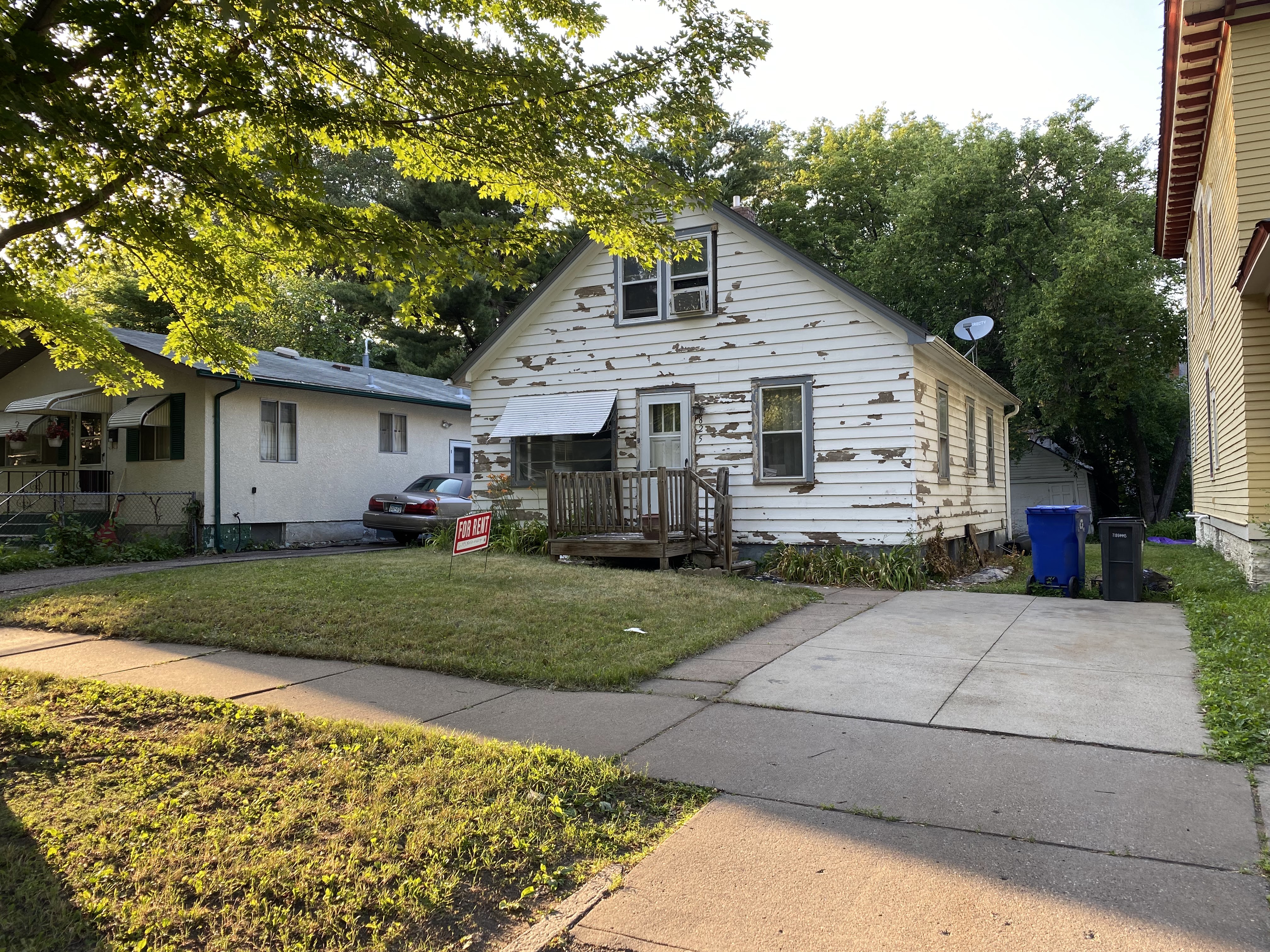
[A house for rent in the Rondo neighborhood.]

Well, the Saint Paul Rent Stabilization Stakeholders Group has wrapped up its business, and the 36-page report (with a 250-page appendix!) was submitted to the City by the folks at the the University of Minnesota’s Center for Urban and Regional Affairs (CURA). 

There’s good news and bad news. The bad news is that, in my opinion, the Task Force was not a success. (Note that I refuse to use the term "stakeholder," and will refer to it as a "task force" from now on.) We didn’t craft a good rent stabilization policy, and I doubt that the process created political consensus that will bring anyone together who disagreed about rent control. Those were probably the main goals going into April.

But the good news is that the Task Force was not a failure. It did not completely implode, and there is a set of recommendations that can point Saint Paul leaders in the right direction for amending the policy on the books today. 

That’s where we’re at. Despite the bumps along the the way, the Task Force creates a starting point for a conversation, showing broad strokes around which Saint Paul can move forward. With a good discussion, and hopefully input from the Mayor’s office implementing the modified policy, I hope city leaders can work out a good long-term rent stabilization policy. 

Looking back on the Task Force experience, I’m going to share what I think that policy should be and why. 


Thirteen Weeks of Impasse

[Watch all the meetings here.]
From the start, I didn’t have high hopes there’d be much common ground. The election was still fresh in the minds of most of the participants (myself included) and most people had strong opinions. Because it was such a large group, it proved easy for a small number of people to dominate the conversation. There were many people (at least half) that never spoke once to the group as a whole. This isn’t a knock on the two co-chairs, who did a good job, but the overall dynamics were not conducive to building relationships or mutual understanding.

The main problem was that not everyone agreed there was a problem. Of the 41 members, maybe one-third were people who had worked on the rent control ballot campaign. Having spent a year trying to put their policy in place, most of those members were ecstatic about the status quo. It’s not hard to see why folks were not thrilled about a group whose stated purpose was to undo their work. 

That meant that right from the beginning, and almost unwaveringly throughout the proceedings, a large percentage of the Task Force was not on board with its purpose. And I don’t blame them either; I’d have felt the same way. 

It didn’t help matters that, during the weeks of policy discussion, moderators never made a case for why change was necessary. I never sensed that the CURA team leading the eight weeks of policy context viewed the existing ordinance as a problem, and throughout the conversation, there wasn’t any any sense of the stakes to policy choices. It was mostly an overview of policies from around the country — “some cities do it this way, other cities do it this way” — without a sense of what the downsides and tradeoffs might be.

That’s not necessarily the CURA folks’ fault, either. I doubt most of the CURA staff viewed the status quo as a problem, and Director Ed Goetz had been clear throughout the election campaign that he supported St. Paul’s rent stabilization ballot initiative.

This is a long way of saying that most of the Task Force proceedings were, in my view, a waste of time. (I bet most members feel the same way.) Almost nothing from the weeks of preparation for the policy negotiation changed anyone’s mind. The Task Force could have skipped those eight two-hour meetings, spent more time on the small group negotiation, and the outcome would probably have been just as good, if not better. At the very least, doing so would have saved 41 volunteer members, and every staffer at CURA, 20 hours of prime Tuesday afternoons during a wonderful Minnesota spring and summer.

(A side note: I've been researching rent control for a while now, and didn’t personally learn much from the various lectures. In fact, I found the four-part ULI/Minneapolis FED rent stabilization discussion to be more informational than the Task Force lectures, and for housing policy nerds, I recommend those discussions. The only thing that surprised me during the Task Force learnings - mentioned in the talk by Ken Barr - was that the the “reasonable rate of return” provision on the books in Saint Paul is not a simply policy idea, but rather a CYA legal requirement based on existing US case law. In other words, if a city or state passes a rent control policy that does not include a “reasonable rate of return”, it will almost certainly be thrown out in court.)

The point is that there was a gap at the center of the Task Force meetings: What was the issue here? What was the problem we were trying to solve? What were the downsides about the existing policy? 

Without common ground — the idea that there was a problem that needed a solution — the Task Force was hobbled from the start. 

So today, looking back and looking forward, it begs the question: apart from the new construction exemption provision (which I have written about at great length), what are the problems that the Task Force was convened to solve? 

Here are the two biggest that I see.


 [Still-vacant duplex on my block; it was like this for over a year.]

Problem #1: Disinvestment

My wife and I bought a small house in Frogtown about three years ago, the first time I’ve owned any property. Right away, we learned that the shoddy looking duplex next-door had some problems. For one thing, twice when we were home, some sort of police gang task force rolled up and strode across our lawn with rifles to knock on the door of the downstairs tenants. They eventually moved out, but the duplex remained pretty in said shape, with lots of people coming and going. Probably the nadir was when we watched EMTs pull a dead body out of the basement, a woman who had either overdosed or died of old age. 

Anyway, that was not great.

Then one day, I walked out the door and found a guy — let’s call him Dave — who was at that very moment thinking about buying the duplex. I encouraged him, and he did.

For the next year, Dave worked on the duplex, and had contractors there most days going in and out doing things like laying concrete, gutting the interior, remodeling the kitchen, building a new set of exterior stairs, adding a doorway, fixing the falling-down porch, pretty much everything except for the exterior painting and aesthetic stuff. 

(Speaking of which: It'd be nice, "Dave", if you could get to that one day.)

I’d chat with him every once in a while, to see how it was going. According to Dave, he’d spent around $100,000 on it (so far), and he’d maybe make his money back in ten years. But he also added that “it was in terrible shape,“ and that if nobody had come in and rehabbed the building, it would have been condemned. Things had gotten that bad.

[Newly vacant lot across the street from my house.]

The point is that much of Saint Paul's housing stock is in rough shape. It's not unusual to see vacant buildings and lots in many Saint Paul neighborhoods. On my one block in Frogtown, there’s a vacant lot across the street that had a house on it as recently as 2015. Two doors down, another house has sat empty for three years, though someone comes by to mow or shovel once in a while. Three doors down the other direction sits one of the city’s 400 registered vacant buildings. (The above photo of the doorway is a photo of that duplex.) 

Judging by the photos, woodwork, and rooflines, all of these homes were once nice places for people to live, and should still be homes for someone today. My block in Frogtown is one of the nicer in the neighborhood, and if you go to any of the most disinvested parts of Saint Paul you’ll find a similar landscape of homes sitting empty and falling apart. 

[Map from this excellent MPR article on the topic.]

Saint Paul already has a disinvestment problem and I worry that the rent control ordinance will make it worse. There’s certainly a fine line to walk when crafting policy that places hard caps on landlord revenue while expenses rise steeply. On one hand, cities don’t want policies that make it easy for flippers or investors, triggering the loss of affordable housing through gentrification. But cities should be cautious about passing policy that makes it far less likely — as is the case with Dave — for people to fix up Saint Paul homes in desperate need of investment. There’s a cost to turning the landlords / renters dynamic into a zero-sum game, and then picking only one side. 

There’s no way to be precise about how the existing policy will affect disinvestment and the housing stock, and figuring out where to draw the line is going to be a challenge. At the very least, it would have been helpful to hear learn from the many (I thought) open-minded property owners on the Task Force. My take, having talked to a lot of folks who work locally on housing, is that the existing policy is not balanced, and will worsen disinvestment in Saint Paul. 

How much worse? I can't say, but I do think city leaders should have a useful conversation about it.


[One of the many rent stabilization forms.]


Problem #2: Opaque Bureaucracy

My second big goal was to minimize opaque city bureaucracy. As much as possible, it’s makes good policy to not have city departments handle things that could otherwise be sorted out through well-crafted regulation. (It's kind of like how you should design streets that make it hard to drive fast, instead of lowering the speed limit on a wide road and relying on enforcement to solve the problem.)

For the record, the policy on the books does not work that way. Even though the city is implementing the November ordinance with about as light a touch as they can, the policy is not flexible and, especially in a period of high inflation, creates a lot of extra overhead and paperwork. For example, check out the 19-pages of legal rules, or the 22-page form that every landlord has to keep on hand if they increase rent over 3%. Both are only written in English.

There are open questions about how the audit system or the approval process works, and I don’t know how that will go, but it will likely involve a lot of staff time at City Hall.  Then there’s the issue of how rental advocates and their lawyers will challenge rent changes, and how those will be handled. To me, it seems like a lot of overhead just to allow rents to keep pace with inflation.

Another problem with a bureaucratic system is that it’s opaque. My guess is that the existing rent control ordinance will become a classic “Saint Paul situation” where only insiders or big players know how things work. People who know people in City Hall will easily get their way; meanwhile, anyone new to the the city, for whatever reason, is going to be frustrated. Having sat at public hearings behind the curved table in the City Council chambers and listened to zoning complaints, I know this is the kind of thing that drives folks nuts about Saint Paul. The city should try to avoid unpredictable bureaucratic hoops.

The final problem with an opaque, sort-it-out-with-staff-time approach is that Saint Paul city departments are understaffed across the board. I’ve been close enough to city workers over the years to know that, especially with an ongoing labor shortage, most people are doing the jobs that two or three folks should be doing. The situation leads to turnover, creating a downward spiral where experience evaporates and services get worse.

The point here is that, given a choice between an inflexible policy that relies on challenges and audits, or a flexible policy that adapts to changing circumstances, less is more. If Saint Paul can figure out a way to create the same positive outcomes for renters without manufacturing a ton of opaque paperwork, it’s probably a good idea. 


My Suggestion Coming out of the Task Force 

Anyway, to keep a long post slightly shorter, here’s the policy that I think would make for a good starting point for the City Council:

  • Rent cap set to some variable rate based on consumer prices or wage growth
  • Exemption for new construction (and conversion to residential) of 15-20 years
  • Vacancy decontrol with new renter protections (e.g. just cause eviction)
  • (Other details are less important to me, but I can see the case for including other policy provisions.)

(Note that this is similar to, but not exactly the same as, the ending recommendation from the Task Force.)

Here’s a point-by-point case for these policies:


15-20 Year New Construction Exemption

About a year ago, when I first started digging into rent control literature, the lack of a new construction exemption seemed like the biggest problem with the policy proposal on the ballot. Almost no other US city applies rent control to new construction because, so the housing folks tell us, it will reduce investment and construction.

A year after signatures for the ballot measure were first submitted to city hall, and seven months after the election, the impact is clearer. My ballpark guess is that the rent control ballot measure has delayed / prevented something like 3,000 new apartments in St. Paul, with that number likely to grow. Unfortunately, the ballot measure coincided with a housing construction boom across the US and the metro.

[I made this chart based on HUD data; I know it's not the best chart.]


This is why, when the Task Force started, Mayor Carter asked us not to deliberate about a new construction exemption. Mayor Carter said that his mind was already made up, and that we’d be wasting our time discussing that provision. (For the record, we talked about it anyway.) 

The only open question is how long the rolling exemption window should be, and I certainly don’t know the answer. Something around 15-20 years seems right (what they are doing in Oregon and California), but the real answer is whatever the number is that gets market-rate construction happening in Saint Paul again at a good pace.


Variable Rate / Inflation Adjustment

Another item about which there was early consensus was that a variable rate was preferable to a fixed one. Again, this seems like an obvious change to me. When inflation is over 7%, a 3% rental cap seems like folly.

This is why it’s a strange thing that, during the deliberations, even when inflation was at a 40-year high, the topic of high inflation barely came up. Nobody really talked about the pros and cons of indexing in this kind of environment. Personally, I see lots of reasons why indexing is a good idea, and few reasons for keeping a fixed cap.

(Note that a variable rate is not necessarily more permissive: there are lots of situations where CPI would be lower than 3%.)

Anyway, that should be an easy change for the City Council and Mayor’s Office.


Vacancy Decontrol with Strong Tenant Protections


[Saint Paul could try again.]
This was a big sticking point for the Task Force, at least theoretically, and I think it's probably the most important piece of the policy puzzle. I really hope that it ends up in any amended ordinance that Saint Paul adopts.

The argument against vacancy decontrol is that it incentivizes landlords to harass and otherwise force their tenants to leave their homes.

The argument for vacancy decontrol is that, according to David Garcia of the UC Berkeley Terner Center, it's the most effective way to avoid disinvestment. And because it ties rents to individual tenants, rather than the unit, it’s a straightforward way for landlords to understand the policy. This is especially true when compared to its alternatives, which almost always involve a complex series of write-offs and pass-throughs where small details easily become loopholes.

(This is not to mention an other issue that Matthew Desmond recently mentioned this in his recent Saint Paul talk on housing: dicriminatory screening and “key money” style corruption. According to Desmond, this is an issue in cities like New York and states like California, where there’s a big gap between rent controlled housing and the rest of the housing market.)

With vacancy decontrol, as long as you can solve the harassment/forced removal problem, vacancy decontrol seamlessly combines renter stability with avoiding disinvestment…

… which is why I think a tenant protection provision is the key to the puzzle. If you have legal protection for tenants like just cause evictions, worrying about coastal-city shenanigans becomes less of a problem in Saint Paul. 

Amending the rent control ordinance seems like a golden opportunity to revisit the tenant protection push that met an ignominious end in Federal court. Vacancy decontrol would work well if it was tied to tenant protections, and would focus the city policy on the achievable goal of renter stability rather than the unachievable one of keeping city rents below the regional market-rate.


[From this article on rental trends in Saint Paul and Minneapolis.]


Other Things and Next Steps

There are some other policy tweaks that could be good ideas, depending on the kind of fine-grained details into which a 41-member group should never delve. There’s a case to be made for an exception for owner-occupied rental properties, e.g. someone who owns and lives in a duplex. Any policy we have should continue to incentivize the creation of ADUs. I think there's a case for different rules for folks who rent rooms to family members.

It’ll be interesting to hear what ideas Council Members have about crafting a long-term ordinance that works for the diverse parts of Saint Paul. I think there are likely to be a bunch of ideas that have pros and cons, tradeoffs between ensuring stability and avoiding disinvestment, between opaque detailed regulation and a more flexible policy.

Wherever Saint Paul moves on this, the sooner the better. Back in the early days of the rent control campaign, CURA head Ed Goetz said in a Sahan Journal interview that “Saint Paul will act as a sort of test for policymakers in Minneapolis.”

The early test results are not great. There’s a huge lack of new housing being built which (because housing projects and lawsuits take a long time from start to finish) is likely to drag on for years, even if the policy changes in November. Meanwhile, for the first time in living memory, Saint Paul rents are now higher than those advertised in neighboring Minneapolis. (See above chart.) It would be ironic if the biggest beneficiaries of the Saint Paul rent control proposal were renters living in Minneapolis, but so far, that’s what’s happened. 

The ball is in the City Council’s court. The good news/bad news Rent Stabilization Task Force outcome opens the door to change, but I doubt that the proceedings changed anyone’s mind. It’s likely that, whatever amendments the Mayor and a City Council majority want to make to the existing rent control ordinance, it will be a tooth-and-nail fight. 

It’s too bad, because there are good policy solutions that will solve some big problems for Saint Paul while ensuring renter stability and better quality, more abundant housing. I hope Saint Paul leaders can figure it out.

2019-08-30

The Three Fiefdoms of Saint Paul

[Map here.]
People tend to think that Saint Paul is Saint Paul, by which I mean that land and space within the borders of the city of Saint Paul are, in some real way, controlled or shaped or regulated by the city government.

Well, that's true sort of. For the vast majority of the city's territory, the local government can do things like use police, charge taxes, design the streets (sometimes!), regulate the buildings and how people use land, and other things like that.

However! There are three exceptions, places where Saint Paul has very little power even within its own boundaries. These are the mini-kingdoms in our midst, places where Public Works or the assessor or the zoning code dares not tread.


#1: The State Fair (230 acres)

So, yeah, what city is the State Fair in anyway?

Most people would say Falcon Heights, but they are sort of not even in Falcon Heights either. They are their own government.

Como Avenue at the south edge of the Fairground is technically part of Saint Paul, however every year for two weeks the powers that be at the State Fair just do whatever they want to the street, without so much as consulting or maybe even informing the City. Often that means erasing the bike lane, even if cars don't use the extra traffic lane.

Basically, the State Fair does whatever it wants with their land and is accountable to nobody. Falcon Heights has no say over the Fair either. They are controlled by a shadowy cult, and nobody can criticize them lest they be declared un-Minnesotan and banished.


#2: The University of Minnesota (.62 square miles)

As any administrator will quickly tell you, the University of Minnesota is older than the state itself and they basically do whatever they want with their two campuses. They have their own police force, their own transit system, and their own private street (the "transitway") which they control. They also have vast sums of money with which to buy up property around their campuses.

God help the poor planner who has to reach out to anyone within the University's Byzantine bureaucratic administration if they want to coordinate on something like street changes, a bike lane, or anything else. They do whatever they want, and the best that a city hosting the U can do is to pray for their favor.


#3: The State Capitol Area (.5 square miles)

Back in the late 1960s, the State Government and the City of Saint Paul agreed to bequeath a large portion of the city on the northwest edge of downtown into the hands of a state government committee called the Capital Area Architectural and Planning Board. This extends, by the way, into downtown proper and all the way over to the Cathedral doorstep. From that point on, the vast majority of the land became parking lots, grey office buildings connected by tunnels, and empty green grass with statues in them.

There's nothing the city of Saint Paul can do about it either. Huge areas like the Rice Street Sears site are simply out of the hands of city planners. Historic buildings like the Ford Building are prone the whims of administrators who work in a brutalist structure accountable to some Greater Minnesota  legislators and maybe, if you're lucky, the Lieutenant Governor.

In Conclusion

These are the three fiefdoms of Saint Paul, parts of the city that play by their own rules, where the city staff or mayor's office can only beg for favor. There are smaller less-powerful or contiguous kingdoms and duchies as well, like the University of St. Thomas, Bill McGuire, the Metropolitan Airports Commission, the Mississippi River Critical Area, the Ford Motor Company, the Mancini family, or the Canada Pacific railyards.

One only hopes that the nameless rulers of these vast swaths will be beneficent.

2018-05-07

Another Dive in Limbo as Malina's Sports Bar Goes Up For Sale

The unique Dale Street dive, Malina's Sports Bar, was on the City Council agenda last week, which is something that fans of dive bars never want to see. Malina's is one of the last remaining bars on Dale Street, which used to have a bunch of dives but has become more economically marginalized ever since half of Dale Street was bulldozed and the street expanded back in the 1960s.

Back when I living in Saint Paul's North End, Malina's was the most thriving place to go to hang out. The place was unusual, for sure. It was either very closed or very open, and you could tell which was which by just scoping out the parking lot. If there were a dozen cars there, then they were open. My roommate and I used to go there whenever we were bored to drink Beer Lao and watch the best karaoke in town. This was back in the day when a man named Vone owned the place, a guy who was already friendly towards us and often insisted on me singing Sinatra songs on the karaoke stage.

(I usually obliged.)

Here's an expert from my blog when Vone was shot, trying to close up the bar one night:
The other strange thing was that Malina's was either packed or empty. There was very little in between. About half the time you'd walk in to find yourself alone with either Vone or the woman I presume was his wife. She never really spoke to us, and did all the cooking. On the other hand, Vone was gregarious. He was the bartender/owner, and he seemed to like when we'd visit. He'd chat with us, always knew how long it'd been since we'd been there last. We'd talk in vague platitudes about the bar, the neighborhood. He told us he had been a social worker, but not a lot of other details. It didn't matter. 
The bar was almost all young Hmong people from the neighborhood. I have one or two Hmong friends, and when I'd tell them that I enjoyed going to Malina's, they'd roll their eyes. "That's where guys go to cheat on their wives," one told me. Those dynamics were lost on me. All I noticed was the karaoke. I've been to a lot of karaoke bars over the years, but none of them could hold a candle to Malina's. The standards were high; there was a set of about two dozen 80s pop ballads, and you'd often see a shy looking girl wearing a sweatshirt take the stage and absolutely crush some Céline. "I Will Always Love You" was popular, and something about crying eyes, anything with gradually escalating key changes.  Usually Vone would try to get me to sing too, for some reason, and after a few beers I'd oblige with a crap rendition of some Sinatra. Nobody clapped for me, but Vone seemed to enjoy it. 
I'd often bring people to Malina's who were visiting from out of town, you know, like from Minneapolis. Vone usually made us feel comfortable there. The food was good, too. Malina's served a few different kinds of larb (a meat salad), or you could get a plate of papaya salad for a few bucks. Maybe its my imagination, but Vone seemed to delight in making it as spicy as possible. I'd sweat for fifteen minutes after eating it. There were other things on the menu too that were beyond my degree of difficulty limit.  
Over the years, Vone spent a lot of time trying to fix the place up. He always seemed to be in a struggle with the neighborhood. The other Hmong bar down the street, Moonlight Magic on Western and Thomas,  was a lot more of a dive. A few years prior, it had had a gunshot incident and been closed down by the city. That was the neighborhood. Lots of places had that problem, bars on Rice Street, anywhere with lots of young people.  
When my roommate moved away, I started going there a bit less often. Each time I'd return, Vone seemed to have done some remodeling. He painted the walls. He installed booths all around the old pool-hall room. The last time I was at Malina's was about a year ago. There was a live band, a buffet, and everybody was dancing. I'd brought a date, and we joined them. 

On the recent Frogtown dive bar tour last summer, I brought the group back into Malina's. This was years after Vone's tragic death at the hands of a disgruntled customer, but the place seemed like it was back up and running. The owner was welcoming and gracious to our tour, and everyone seemed to enjoy the eclectic space that is Malina's.

It sounds like the bar owners are trying to sell the place and keep it open, and that CM Thao is supportive of helping with the process. I hope that the owner can transfer the bar and liquor license to someone who can keep it running, and I hope the city can help make that happen. The city would be much better off with a welcoming and thriving bar instead of another vacant building on Dale Street.

[Follows are some pics of Malina's from the 2017 Frogrtown Dive Bar tour.]

[Malina's parking lot.]

[A nice Malina's sign.]

[Newspaper article on Malina's from the Hmong Times.]

[Rules.]

[Not sure this is actually a real ordinance thing...]

[The telephone pole outside Malina's is also one of those kitchen-style growth charts.]

[The stage.]

[Amazing Malina's poem.]

[The Betty Boop thing is a weird remnant from the previous bar's incarnations...]


2013-02-20

Why You Should Send Public Comment to your City

[Yours truly swearing on a couple different constitutions.]
For a little over a year now, I’ve been serving on the Saint Paul Planning Commission. There are twenty or so members of the commission, and we meet twice a month to go over site plans, zoning exceptions, and to guide city staff on long-range planning. We make recommendations to the city council, and most of the time they listen to us.

Most of the experience is a somewhat deliberative, somewhat careful study of different land use issues in Saint Paul. Most of the work is done in committee, and there are a lot of smart people on the Commission that care about Saint Paul and have good ideas about its future.

The most interesting part of the job, though, is the interaction with the public. Sometimes, contemplating a controversial proposal, we have a public hearing where anyone can come in and testify about some new zoning or planning issue. And on almost all of the documents we get each month, all the public comments (letters sent to the city) are included and quantified in the summary.

Believe it or not, city staff, local politicians, and volunteer commissioners like me actually notice and pay attention to comments from the public. And on almost every issue, there aren’t a whole lot of comments to be had. It means that a small group of people can have a large impact on these land use and planning decisions. Most of the time, these comments are dominated by people upset with traffic, parking, or urban density. It’s very rare to see a comment calling for more urban development in the city.
[Everything we look at has a summary of the public comments.]

The point here is that, even though it might seem stupid or trivial, it’s important to take a few minutes and send in an email comment when an interesting issue catches your eye. I’m loosely involved with a whole bunch of groups around the Twin Cities that are trying to change the conversation about urban design, groups like the city’s two bicycle coalitions, Streets.mn, or Transit for Liveable Communities. (For example, yesterday’s call to action about the bicycle infrastructure along Washington Avenue from the Minneapolis Bicycle Coalition.) In all of these cases, you’d be surprised at how much of an impact a few minutes from a few dozen people might make. There’s a big difference between a comment summary that says “6 letters received, 6 opposed” and one that has a bit more balance.

There are a lot of problems with the kinds of citizen participation we have city governments, and I’m not promising I’m going to read all the public comments I receive. And I don’t expect anyone to actually attend a public hearing or community meeting, unless you’ve got a screw loose or nothing better to do. But next time you see an opportunity to contact your local council member or city staff, take a few minutes and do it. You might not believe it, but it can make a difference.

2012-08-14

All or nothing: The Value of Doing It Right The First Time

[White plastic things!]
Riding in downtown Minneapolis last week, I was pleased to discover a shining white row of plastic things along the First Avenue cycletrack. Until this moment, I’d never realized how happy a bunch of white plastic thin two-foot long thingies could make me. Now they routinely visit my dreams, dancing like the broomsticks in Fantasia, and I’m starting to worry about my sanity.

Am I turning into a crappy plastic objects fetishist? Recently in China, a woman started a DIY traffic calming movement by tying a sex doll to a tree at a dangerous intersection. I guess the idea is to get (horny male) drivers to slow down and pay more attention. I’m envisioning a future where I run around the city disbursing traffic cones with a a “real girl” doll strapped to my back so that sexually unsatisfied men don’t run me down with their cars.

[Maybe we could get Sexworld to sponsor the next 1st Avenue pedestrian improvement?]
For those who don’t know, the First Avenue cycletrack is Minneapolis’ first quasi-bona fide cycletrack. A cycletrack is viewed by many as the gold standard of bicycle infrastructure. It’s a bike lane separated from moving traffic not just by a stripe of ‘bike lane’ paint, but by some sort of barrier. For example, you could separate cyclists with row of parked cars, a change in elevation like a curb, a row of plastic white thin things, or all of the above. Cycletracks are common in northern European countries with very high rates of bicycling. Many people (particularly those uncomfortable riding in street traffic) find them to be quite wonderful if done well.

That’s why I was happy when Minneapolis announced a few years back that they were going to build a cycletrack down First Avenue. Despite the protestations of business owners concerned about delivery trucks, the city went ahead with the project.

There was only one problem. They did a half-assed job. Instead of a clearly marked and separated bike lane, they just applied some paint between the parked cars and the curb. They also made the parking lane time-sensitive, so that during rush hour the row of parked cars disappears entirely. (That’s normal on many streets.)

The problem was that, without a some sort of clearly marked area to inform people where the cycle track was, nobody really knew what to do. People parked right in the middle of the bike lane, so the city put up more signs. People still parked in the middle of the bike lane, so the city put up some flashing electronic signs that makes First Avenue seem like Las Vegas in a kaleidoscope. 

Even the current signage funhouse doesn’t always work. You’ll still find people parked in the middle of the bike lane, people who are presumably illiterate or wearing two pairs sunglasses with a sombrero pulled down over their eyes or something. Until those plastic thingies appeared the other day, even the most ardent bike activist would admit that the First Avenue cycle track was a quasi-fiasco.

Minneapolis isn‘t alone in being reluctant to commit to the whole posterior. I’ve covered St Paul’s biggest bike debacle, the Jefferson Avenue bike boulevard, like a blanket in January. It's not a heartwarming story. And the way that it turned out, this bike boulevard should be probably only be labeled a “bike boulevard,” in the same way that Velveeta isn't really cheese.

[The Jefferson Avenue "test median.]
The problem is that the Jefferson project lacks many of the definitive features of a Portland-style bike boulevard (e.g. traffic diverters or traffic calming devices of any kind). And not only did the city approve a watered-down a plan, they built it in a "trial" manner. Instead of simply building a decent pedestrian median (designed to help calm the bicycle street and make it safer to cross busy roads), they built an ugly partially-effective "test median," and then placed a sign next to it encouraging people to call in and complain (which they did). Instead of just doing a good job the first time, St Paul's plan was to do half a good job, and then proceed with it slowly, painfully, displaying all the grace of a circus clown.


[Ha.]
... or get off the pot

I don’t want to be too hard on the Twin Cities. Both of these projects were something new. Both projects were politically difficult. Change is hard! Changing behavior takes a long time. Shifting prioities away from a slavish obsession with the automobile is what they call “a process.” That means that it doesn’t happen all at once. Getting people to bike and walk more is a matter of developing habits literally one step at a time.

At the same time, when faced with a difficult problem, cities are often tempted to compromise. Planners and city leaders end up torn between the politics of compromise and well-designed engineering. It seems that, much of the time, cities make so many compromises that they undermine the very thing they were trying to do in the first place. Sometimes, the perfect is the enemy of the good. Sometimes, you either do it right or you make a complete mockery of the very notion of urban planning. Sometimes, either you build a decent cycletrack that everyone can understand intuitively, or you compromise and construct a bicycle bewilderment with cars parked willy-nilly underneath a flashing LED circus filled with fine print. Then, two years later, you go back and gradually add in some thin white plastic things that you should have installed in the first place, and everyone on the street goes “Oh! That’s what its supposed to look like.”

I know which I prefer...


Update:

A report on white plastic things in Portland that got hit by cars and destroyed. TWICE. 

2012-04-05

Liveblog of April 4th St Paul City Council Meeting on the Jefferson Bike Boulevard

[The dreaded Jefferson Avenue sharrow.]
[For background on this issue, see here or here.]

i arrive at a bit before 6:00. the city council meeting is in the basement because the council chambers are being remodeled. they schlepped the big comfy chairs down here just for the council members, who don't like sitting on regular chairs. i understand the impulse, but feel compelled to make fun of it regardless.
packed room, discussion going on some noise stuff happening on the central corridor, which gets resolved somehow and quickly.
 

next issue is a conditional use permit for a wind turbine at metro state university, etc.

testimony is given by a testifier, and an appellant.


CM Lantry makes sure to spend a lot of time discussing the role of timers during public hearings. states that “we have about 134 public hearings tonight.” seems pre-exasperated.

there is currently testimony by someone who doesn’t like the metro state wind turbine. he’s doing a good job, i guess. he’s particularly annoyed about the community engagement and public notice parts of the project. process! seems to be particularly annoyed about the decisions made by the planning commission. says “would you want to live next to a wind turbine that creates a low frequency noise at all hours of the day?” now he discusses the historic nature of the area, doesn’t like the “industrial look of the area”… etc. invokes reading and getting quoted in the “east side review newspaper.” says “bird strikes and bat deaths are certain to result." says “i’m not against alternative energy.”

i note that jane mcclure is calmly reading the some local newspaper through this whole situation.

another testimony, this time by someone who seems to be his wife? she holds petition up in her hand that she says has 60 names. says “wind turbines do not belong in residential neighborhoods because of safety, health concerns, etc.” this leads to a monologue about “wind turbine syndrome”. she invokes school nearby. “health and safety of children needs to come before alternative energy.”… says he likes being in a preservation area.

CM Tolbert clutches his chin and seems calm.
 

CM Carter III and CM Brendmoen chatting a bit during the testimony. CM Thune passes some sort of large document thing to CM Bostrom.

testifier demands investigation of Audubon society’s approval of the wind turbine.
says “potential safety problems for the general public.” asks the Council to please override the planning commission’s decision…

third testifier appears in support of the appeal, states that the planning commission erred in their decision. swede hollow is a “particularly remote and wild area.” complains about cellular towers.

a fourth testifier against the wind turbine, representing the dayton’s bluff community council.

fifth testifier, the block captain of the precinct, in favor of metro state and renewable resources, but against the wind turbine. concerned about the “overwhelming community opposition." says “metro state’s voice is heard the loudest b/c of their deep pockets.”

now the opposing point of view. metro state’s suit guy, some vice president (VP) testifies. he uses a lot of numbers, like “12-11 #1” and “20 kilowatt.” invokes many details. says “B2 community business district." says“monopole.” says wind turbine will add to the vibrancy of the east side, will be symbol of science, innovation, inspiration, etc. invokes macalester college’s similar turbine, lists long series of facts, etc. quite convincing etc. says “five quarts of oil.” says impact in the neighborhood is actually from “private automobiles in the neighborhood” not from the wind turbine.


jane mcclure has large yellow notepad, plays with her hair.

VP talks a lot about the city zoning of the area. talks about how they moved the university into “what was then an abandoned hospital.”

introduces science museum guy. two folks walk out of the room. science museum guy talks about “educational benefits”. talks about energy footprint of America.

i have to go to the bathroom.
 

i return.

talk is still going on. VP calls it a “pocket turbine.” talks about little Johnny, the 5th grader, who will be inspired etc.

looking at the meeting agenda, i realize that the Jefferson blvd was first approved on my birthday in 2010, almost 2 years ago.

testimony is over. CM Lantry starts talking. she talks about cell towers and the zoning code. moves to grant the appeal. says that a stationary object is not the same as one with moving parts. says that “this is a gateway”. says that planning commission missed the mark.

st paul police officer #1 next to me on one side is playing with his smart phone. on the other side, transit for liveable communities (TLC) head barb thoman writes smartly on her legal pad.

CM Lantry is pretty convincing. she’s really laying it on.

CM Thune asks about the height. gestures a lot,  bigly points to the wall. says that it’s a large blade. some discussion of what 16’ is. looks like the tower is going to get shot down.

some talk from CM Thune about whether it can be seen from summit avenue.

CM Brendmoen asks for clarification about the vote. asks about what process they should be taking, if the city doesn’t have a process for handling this.

CM Lantry talks about the Macalester one… says its not visible, you can’t see it, which is its beauty, etc. suggests that the Metro State proposal is “not in any way camouflaged”

CM Brendmoen says we should have more wind turbines in st paul. suggests need to have a process, etc. says she is hopeful the planning commission will think about this.

CM Stark says it’s a “real tough one”. says he is weighing promoting energy independence v. “legitimate concerns” & “the spirit of the zoning code”.

appeal passes unanimously. lots of people leave.

[Sausage being made.]
Jefferson is next.

CM Tolbert moves to amend the boulevard with his amendment. said amendment, which nobody has ever seen before, involves changing “linear pavement markings to zebra striping,” changing the LED sign to a pedestrian activated flasher, and remove the proposed by public works (PW) traffic circles. then he lists all the things that stay. says it’s a “reasonable solution to 5+ years of discussion”

CM Thune offers an amendment to the amendment. wants to add a one of the circles that have been taken away to his area, plus wants to add some lights under the 35E bridge. seems to be an attempt to take some of the money that CM Tolbert is giving up. says “purely a safety issue”

CM Stark talks. he is not a big fan of the removal of the two traffic circles, because “as a project they help kind of complete it because of the overall experience of the street,” otherwise says he supports the amendments.

PW guy starts talking, engineer guy, “quick comment on the amendment”, OK w/ the additional one, lighting, says they’d have to find another source of $$ for the extra CM Thune lighting. seems like he is not a fan of that.

PW guy explains that there are two 35E bridges over Victoria. CM Thune talks about interpretation of the amendment to the amendment. changes his mind about the lighting.

everyone laughs at something that PW guy says.

CM Lantry says that we have a “huge pile of people” that want to be heard.
i note that its kinda funny that they are trading traffic circles, from west to east.

CM Lantry says, to a staffer, that twenty people have signed up, thus it will be 45 seconds per person.

CM Stark asks for a staff report. PW sustainable transportation Emily Erickson (PW EE) gives a quasi-epic history of project. talks fast: Jefferson went from a collector street to residential street back in the 80s. she mentions citywide goals for transportation”. mentions “policy 3.8”, the “project known as Jefferson avenue.” talks about 2008, the origin of the project when they applied for the money in the first place. she goes over the project even more. says “unmatched east-west corridor in this section of the city.” she goes over public hearing history, talks about the “test refuge” being “inconclusive.” says a “notification error occurred”. talks about the “restarted process”, all the meetings. she talks about the outcome: sharrows, wayfinding, “advanced dynamic speed display signs”, “advance crosswalk sign” “rapid flash beacon”, “”treatments“, ”unwarranted 4 way stop.” gives another explanation of the term “warranted”. talks about circles proposed, including one at finn, etc. gives explanation of neighborhood traffic circles. says they “have been implementing them for 25 years.

PW guys whisper to each other.

PW EE talks about the presentations of the plan. talks about transportation committee & planning commission plan, which approved everything. talks about media from across the city, says majority are in favor. suggests that there were more than one side. 18 ppl and 10 ppl. commented on each side, about the two main problems with the proposal.

i notice the smallness of the numbers of people involved, suggesting possible flaw in the process here.
[A really long line at the Seattle airport.]

PW EE says “given the extensive outreach.” mentions 7000 pieces of mail in the last nine months, 4 yr process. says “intensive commitment” of “staff time & cost to the city”. says “values engagement... will make choosing to walk or bike more convenient along entire project length.” mentions the problem with the funding, etc.,  says she will answer questions.

CM Thune says she is concise.

CM Lantry announces that the 6 people against the blvd should approach the mic. they will get 2.5 minutes each.

1st testimonier, a big guy in a green shirt. says “everybody in our neighborhood”. mentions tax statements, property values down, taxes up. talks about lack of money. is giving a classic tax rant. gets angry about “city planners.” asks “who the hell you think the federal gov’t is?" says “not free money”, “future generation’s money”. classic anti tax rant. just about as good as they get.

CM Lantry a bit concerned about making sure that he signs in.

2nd testimonier, lady in pink shawl, says how much project has changed. says is “all for bicycles”, just don’t think they need to alter street. says “cost of maintaining the roundabouts.” says some more about having to watch one’s money. says they need to be maintained far after the “magic money is gone”.

3rd testimonier, lady in white shirt. says has “no problem with bikes.” says she resents her “neighborhood being used as a social experiment” and the “physical alteration of the roadways.” says it is a “wholesale giving away the grid system without a plan…”  she is getting mad. says that complete streets resolution is unwritten, says there’s no plan. invokes the “basket weave”. offers apocalyptic vision of when “there are no streets left”. invokes unknown “liability of traffic calming devices.” says “untested territory.” implies a lack of a plan for the transportation committee. says “irresponsible and not fiduciarily sane” to allow traffic circles. not sure that is a word, but understand the meaning anyway.

4th testifier, older guy in white polo shirt, objects to “expenditure of additional funds.” says they are not needed. says stop signs west of Snelling are adequate. says more is “just going to add to maintenance expenses.” invokes snow removal, says nobody bikes in winter. talks about pedestrian crosswalk lights. says “exercise bikers” don’t stop anyway. objects to additional use of public funds to make changes for “a few bikers in the city.” says they don’t have to change the road at all.

5th testifier, old guy in fleece. places picture of a traffic circle on the overhead document camera thing. says is in favor of the project except for “traffic calming devices”… photo is in CM Stark’s neighborhood. says it doesn’t look good [looks good to me!] says “architecture integrity of neighborhood violated by concrete crop circles.” says it’s not safe to bike through them. talks about biking with his grandchildren in back of a burley trailer. calls them “crop circles” again. says that four way stop signs are simple. invokes information from “center for cycling education.” says we need “enforcement of basket weave stop signs.” says “biking is here to stay not just recreational biking… its not going to go away if gas prices drop.”

[A hampster in a hampster wheel.]
Jessica Treat, head of St Paul Smart Trips. says she is in favor of the Planning Commission design. says “well commented and vibrant urban communities… with community assets” like the bikeway design. talks a lot about young people and young families. says “in my business we’re concerned about going beyond good enough… make biking and walking the safe and easy choice, especially for women and women with children”. says “interested but concerned…” says we need need a connected network to help feel “safe and comfortable” to bike and walk. invokes the four year public process. commends public works staff. says all parties have common desire for calm and safe streets. says traffic circles are proven to work, which is why the transportation professionals recommended them. talks about additional traffic circle. says CM Tolbert’s resolution “subverts public process by public and professional staff.” says we need to move forward with a project that “ is more than just good enough.” asks council to hold over any vote until…

gets cut off by CM Lantry, for going a minute over. CM Lantry seems confused. there is discussion about whether or not the ‘for’ or the ‘against’ sides make any sense at all given the last minute amendment. some talking about how the council is going to give everyone who wants to talk, one either “side”, two minutes …

everyone gets in a line. place is crazy now. nobody knows what is going on.

there is some shouting or loud talking back and forth between the council and the audience. it’s not out of control, but its not in control either. 

aforementioned green shirt anti-tax guy says “neighborhood doesn’t know about this except for the twenty people that are here.” walks out.

CM Lantry says “let’s go!”

younger lady w/ baby in a baby Bjorn. says she wants original design. says people in the community need to feel safe. says we need need “calming traffic, better safe movement, encourage people to choose to walk and bike.” baby keeps grabbing the microphone. talks about her and her husband and their choice to live in a bikeable/walkable area. says is a one car family that leaves car in garage most of the time. talks about son liking the microphone. talks about her daycare choice. says that perception of safety is a different story. invokes using trailer on the bike. wants them to lay over. gets cut off.

older lady in sweatshirt, against resolution. member of CIB committee of st paul. says “classic example of squeaky wheel gets the grease.” invokes people who “support cars and parking.” says council has “bowed to pressure of opponents”, vs. professional arguments in favor of calming and biking. talks about the 20 children. talks about 800 cars / day. not being residential. invokes biking on sidewalk, because “cars rule.” refers to earlier discussion and spins her hand in a twirly manner because she can’t think of the word for “wind turbine”…. asks for tabling the resolution, for “sustainable safe Jefferson.”

middle aged tall guy. has been highly engaged. big believer in the bikeway. disappointed in the process. has gone to over 14 meetings. says during this process, minneapolis has doubled bikeways in their city during this one process. invokes Minneapolis vs. st. paul rivalry. invokes the 11th hour amendment vs. “long engaged process that strips further facilities along bikeway.” says only “bike striping” is not what city has recommended. says “not going to the purpose of engaging and encouraging people to cycle.”

lady in paisley shirt. thanks all involve for diligence. says public works staffer Emily Erickson has been an asset. wants to see all kinds of bikers on street. excited to see proposal. “extremely disappointed to see nothing done to section between Fairview and Cleveland.” invokes PW’s testimony. asks why is traffic calming good for all parts of the street except for Highland Park?

Bob, from the planning commission & the chair of the transportation committee. says did a lot of work. talks about transportation committee being founded in 2010. talks about transportation committee and its role. invokes comprehensive plan, transportation chapter. says original project gets to the “very core of the plan… complete bikeway system.” says we need details for “balance appropriate to context of Jefferson ave.” CM Tolbert is sitting back and chewing on his finger. talks about all the transportation committee’s work. says they went over six core issues. invokes planning commission meeting’s half hour deliberation, with the added traffic circle on mount curve “for consistency of application of standards.”

[An 8-track player.]
older guy with red jacket. says “I know what Charlie brown feels like.” says that 23 meetings have been done away with by 1 amendment. invokes 13 years of work on the mac-groveland transportation committee. says it is whittled down to one traffic circle because of the amendment, not appropriate because of all the work and trust put into this project. says “this is not trust… would rather have been talking about merits of project.” says “this isn’t trust… ruptured trust between citizens because of people who aren’t here… nobody knows about this, not going to have ability to talk because, forget it Lucy jerked the football away from us. invokes the 23 meetings to arrive at consensus. says “well tough rocks, I came through with an amendment at the last minute.” guy is pissed, esp about the “last minute” thing. invokes an amendment that appeared in the “afternoon of the day this is supposed to be held.” just noticed man has arm in a sling. dude is pissed.

middle age guy in beige shirt. echoes sentiments. supports the bikeway strongly. disappointed to see the circles removed. needs to have one at wheeler because Jefferson looks like a racetrack. says the trees have been removed because of disease and repaving. says it looks like a race track on which to drive real fast between Fairview and Snelling. says that if you put a circle there, there will be an obstacle in the road, and it won’t be a thruway. tells a story about coming home with his kids from school and hearing motorcycles racing on Jefferson. says his daughter saw it and said, “dad that bike is only on one wheel!” this guy is really good! thanks engineers and planners. walks away.

Jeff, co-chair of the st paul bicycle coalition comes up. forgets to introduce self. is reminded. says amendment “undermines community process… undermines recommendation of planning and transportation commission.” short and sweet. leaves.

older guy in white jacket. very supportive of Jefferson Avenue bike/walk project. not supportive of the amendment. says that basic treatments in design of blvd is good. invokes first public meetings, people who didn’t’ understand why they were doing this. says that nobody understands why they are doing this. tries to explain why we need the boulevard, to “restore public function of public right of way.” says that all the roads that have been built, like 35 and 94, and all those that connect to the freeway do not accommodate the bike. says we are only asking for a a few streets, to “recover something that benefits all of us, not just for bicyclists... part and parcel of what in Oregon they call it a neighborhood greenway”. gets cut off.  looks nervous.

CM Tolbert looks a bit chipper.

short woman in purple jacket. says she is a professional engieer, has invested life in “leading inclusive decision making processes in transportation projects.” is also “resident of Jefferson” says “its an outstanding process led by staff.”

now both st paul police officers to my left are playing with their smart phones.

short woman in purple jacket says “wants to encourage city to focus on innovation in transportation.” says that transportation is one of largest consumers of energy in society. wants to see us leading in terms of transportation. wants to see projected implemented with traffic circles. wants to see city lead as the “capital city.”
older lady in beige jacket. supports original proposal. says “tremendous time and effort.” ends short and sweet.

guy in blue shirt and tie. says he hoped to support bikeway, but sad to speak against it. was a process “well considered… broad consensus.” emphasizes the traffic calming measure, as a biker, commuter, etc. says he chose to live there because of biking to work. invokes the physics of biking. says you can tell the difference between a circle and stop sign. says its very important that calming measure be put in there. says will probably use it twice every day. says boulevard is in best interest of the city and community.

CM Tolbert looks a bit comatose. maybe smug? not sure. stares at pen, yellow pad.

CM Lantry tries to figure out who is left, whether there are any supporters of the plan.

PW head honcho, large and imposing, is grinning widely.

Andy Singer, co-chair of the st paul bicycle coalition. says he agrees about “long public process… likes traffic circles.”  invokes “data” vs. “hyperbole”, “aesthetically enhance a neighborhood.” says “if choice is this or nothing,” core of project is crossing aides at Cretin and Cleveland. lists the things that are good about it. says that people who spoke against the project because of cost aren’t thinking about all the money being spent on cars. talks about the % of bike commuters. says we are not spending anything like 5% of budgets bikeways. says city spends more on golf for one year than on bikes. says is in favor of project, would love to see it. if this is all there is would love to see it pass.

old man, hunched with glasses. talks about traffic calming. invokes a conversation about traffic calming he had on porch once with CM Tolbert. says they talked for 20 minutes without any cars going past his house. says there is very little traffic on that part of the road. says amendment does good things for mobility limited people. talks about having walked to cretin and waited there forever because of the impossibility of crossing the street. heartbreaking story actually. says is in favor of the ped activated lights.

younger pregnant lady in striped shirt. has participated in public comments. happy that concerns heard about flashing LED signs. says they would have been intrusive. in favor of Jefferson bikeway. chokes up b/c she is nervous.

CM Tolbert almost finishes his diet coke.

younger guy in short sleeve button up shirt. says is a Minneapolis resident who commutes to st paul, goes to the east side by bike to visit his mom. describes his bike route. would like a south route with a more “neighborhood feel” to it. in favor of proposal without the amendment, would love to see a bikeway.

end of testimony. discussion begins.

[A ball made out of rubber bands.]
CM Tolbert thanks everyone for coming down. invokes “long long public process, long process.” goes over all the phases. says “whatnot”. talks about great community involvement. says “active and involved… shows how much people care about mac-groveland neighborhood.” talks about people emailing and calling him.” invokes a judge who had testified earlier. wants to let people know that “he has heard the people.” says there are 5 viewpoints. lists them: 1) people want a total bikeway, 2) people who want less traffic & calming measures, and a bikeway is one way to get there 3) people who want no change because “of collateral effects on their streets”, collector v. residential 4) people who don’t like roundabouts, and want it to stay a “traditional neighborhood” that it has always been in a hot real estate market 5) the “large portion” of people who aren’t opposed, but question the use of public funds… or or are concerned about the hiccups in terms of public notice. says that neighborhood has had opportunity to be heard. says that PW has done a nice job about bringing people together, especially on Tuesday and Monday nights. says “some people have gotten frustrated.”

CM Stark looks annoyed, leaning back.

CM Tolbert continues. says when the city comes into neighborhood, it needs the support of the council member of that neighborhood, or else it leads to an “eruption.” says this is true particularly for things that “change neighborhoods.” says that person who is representing that neighborrhood needs to be consulted from the start. talks about money. says amendment “will comply” with the federal grant. hopes that the budget people will let them know right away if the money might fall through. says its not just federal money, that st paul also spent money on this project, more than originally proposed. he is basically talking right to the TLC staff right now. invokes tax statements, and property taxes going up. says “as a city we need to be very conscious of that because we are stewards of people’s money.” says overall there are unhappy people. says he is proposing a “reasonable solution, to allow us to move on.” invokes the monday and tuesday nights. says “tee ball and soccer games.” says best to have council vote, and move on.

CM Stark talks. says he is not a fan of loss of traffic circles. other parts are positive. likes that CM Thune wants to steal the circle.

CM Thune makes scavenger joke. council laughs. CM Tolbert makes a joke too, but nobody laughs for some reason.

CM Stark continues. says project is by no means perfect. says it’s a big improvement for almost everyone, despite everything. says is going to support it. says “can’t let the perfect be the enemy of the good.” says is “going to change perception of these kinds of projects around the city.” invokes Griggs bikeway, the projects on Prior. says that st paul is making progress vs. Minneapolis.
no other discussion.

passes unanimously.

the three PW guys shake hands and smile. pats on back.
 

all people leave. i look for jane mcclure but cannot find her.
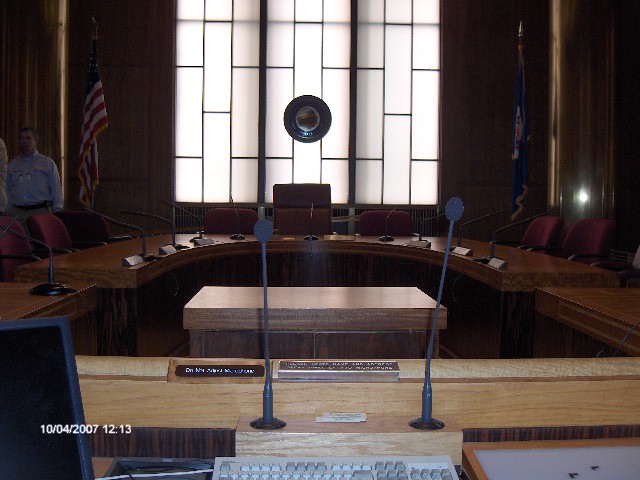

[The St Paul City Council chamber, where the meeting did NOT take place.]