Showing posts with label streetcars. Show all posts

2021-10-14

Notable Quotes #26: Gordon Parks describes Life on the Streets of Rondo, c. 1927

It was all behind me now. By the next day, there would be what my mother had called "another kind of world, one with more hope and promising things." She had said," Make a man of yourself up there. Put something into it, and you'll get something out of it." It was her dream for me. When I stepped onto the chilly streets of St. Paul, Minnesota, two days later, I was determined to fulfill that dream...

[My sisters house,] It was a nice house — two-storied, handsomely middle-class, with large comfortable rooms. And that night, lying in bed, I marveled at the hundreds of deer leaping the bushes on the wallpaper around me, and my thoughts were charged with vague imaginings of the future. Yet I felt that whatever security lay ahead would be of my own making. There was no feeling of permanence in the softness of the ornate bed. I sensed that this was to be an uneasy stopover, and that it owed be necessary to move on before long...


I awoke early the next day dressed and went out of the doors, eager for a look at the new surroundings. The morning was already brisk and alive, with sunshine full upon the big porch. The tree-lined avenue seemed clean and beautiful. The leaves, yielding to the first frosts, had taken on the golds and oranges of autumn. Stretching full length upon the steps, I was suddenly thankful to be in this bright new land.


People were now on the street, moving with the quickness that autumn mornings enforce. I thought that I too would have to move much faster here; otherwise I would be left behind. Maggie Lee had made pancakes and sugar for breakfast. We ate quietly, this three of us; then my brother-in-law, a Pullman porter, went away for a week — the only week that I was to know happens in this house.


I enrolled in Mechanic Arts High School, and got an evening job bussing dishes in a diner, where I was paid six dollars a week and given one meal a day. My brother-in-law took two of this for my rent and meals, yet the four dollars left seemed adequate. It was more than I had ever had at one time in my entire life. The new friends I made kidded me about my country mannerisms and dress, my shyness with the girls and my “Kansas talk.” But when basketball season came, my status grew. 


Real winter came one Friday just before Christmas. A hungry north wind knifed down like a hawk. By seven o’clock that night, the temperature had dipped to ten degrees below zero.


….


After the pool hall closed, I rode trolley cars back and forth to the ends of the line between St. Paul and Minneapolis, sleeping most of the time, using my suitcase for a pillow, waking now and then to the sound of snow and sleet pelting against the trolley windows. I was aware of people getting on and off at different stops, noting that they had someplace to go, knowing that I was only riding out the night. Once when I awoke, the car was empty and dark, the doors were open and wind and snow swept in from both ends. I sat up, rubbed frost from the window and looked out. Except for the falling snow, there was nothing — no trees, lights or landscape. The car seemed suspended the stormy blackness. Again I rubbed briskly at the window, and then there came a sputtering of bluish-white light. The trolley operator was swinging the contact pole to the power line from where it had slipped. The lights came on, and a railing came into view. We were on a bridge, high above the Mississippi River.


I rode the trolley between the Twin Cities for several weeks. The rent was reasonable, and there was always some heat. My food for those days and nights was the single meal I got at the diner, eked out by hot dogs and root beer.


[From Gordon Parks' amazing autobiography, A Choice of Weapons. Parks moved from Kansas to St. Paul at the age of 15.]


[Rondo Avenue streetcar, c. 1947.]


2017-09-05

How Should You Make Up Your Mind about the Riverview Corridor?

[This is an op-ed that appeared in the Community Reporter, the local monthly newspaper for the West 7th area. County Commissioner Ortega's office asked me to share my thoughts on Riverview for his regular column, which is why his picture appears at the top of the column. For the record, I have never met Commissioner Ortega.]

[In this month's edition.]
The reason that plans to invest in transit along West 7th Street keep coming back, again and again, is that the Riverview Corridor has the most transit potential of anywhere in the East Metro. Compared to any other potential connections in Saint Paul, the West 7th area offers better ridership and serves more key places. For anyone looking at improving Saint Paul’s transit system, focusing on West 7th is an obvious first step.

Yet there’s no doubt that the options for the Riverview Corridor are complicated. So far in the planning process, there are a half dozen potential combinations of route and mode. The quesiton remains: Which of the many choices – including the do-nothing “no build” option – would offer the best improvement for the most people?

For me, the critical thing about Riverview is to look at it from the transit perspective, through the eyes of someone riding the bus. That’s what the whole project is about. Before making up your mind, nothing replaces actually riding around on buses and trains to see what it’s really like.

For example, I believe that anyone interested in Riverview should ride the Green Line as much as possible. There’s no other way to see what rail looks and feels like, and how it changes the experience of the street. The same goes with riding on the new A-Line bus down Snelling, or existing 54 bus down West 7th. If you are at all curious about the Riverview debate, take a few hours of your time and ride the 54 to and from downtown, the airport, or the mall. Take it during rush hour, mid-day, or later at night, and see for yourself what the route is like today.

Some key questions: Is it crowded? Does it get mired in airport traffic? Is it comfortable? Would you take it to catch a flight?

(Answers are: Sometimes. Often! Sort of, depending. Probably not.)

Personally, I’ve been riding the Green Line multiple times a week since it opened, and I love it. It’s amazing to sit on the train and watch how people use it. I have seen a tourist family from Iowa get directions from kids from Frogtown. I see parents pushing strollers onto the train, homeless people share space with business people, crowds of Twins fans look dejected after a close loss, college kids moving from dorm to dorm in laundry carts, and always people schlepping their bikes or groceries. Most importantly, just about every day, I watch people in wheelchairs or mobility scooters making their way around the city unassisted. The wider, smoother rail cars have level boarding that provide comfort and dignity for rich and poor alike, allowing people to get around without driving. The Green Line has made a big part of Saint Paul truly walkable for the first time in generations.

My experience riding the Green Line is the big reason why I support rail options for the Riverview corridor. I’m hopeful that, this time around, the planning compromises are a good fit for the unique character of West 7th Street. Unlike the University Avenue-style dedicated light-rail plan, or the historical 1980s plans for bus rapid transit that would have needlessly widened the street, a streetcar can be built so that the sidewalks and public spaces along West 7th are improved and not eroded. In my role on the Technical Advisory Committee for Riverview, I have been pushing to make sure walkability is a high priority, and will continue to do so.

After carefully studying the issue, I believe that Riverview offers a tremendous opportunity to invest in Saint Paul and to boost both pedestrian safety and transit ridership for the next generation. If we invest in high quality transit for Saint Paul, I am confident that within a short time, tens of thousands of people will be using it every day. It will offer unprecedented level of freedom and mobility to people in the West 7th neighborhoods from all walks of life. It will connect the diverse parts of the neighborhood – everyone from the downtown business people to the folks living in the public housing tower – in an important new way.

So whatever your thoughts about Riverview so far, I urge my neighbors to go out and ride some of the existing transit in the city. See for yourself what it’s like to take the bus or the train to the airport or downtown. Think about people who rely on transit every day, and consider what the city might be like in ten years. Then make up your own mind about what’s best for West 7th and for the future of Saint Paul.

[See also: Five Saint Paul Problems that Streetcars Might Solve, Why I Love the Green Line: an Open Letter to my Fort Road Neighbors.]

[Looks like a great place for a streetcar to me.]

2017-08-24

Limited Space Available - Obscure Museums Tour #2: Old Bikes to Old Streetcars

Everyone knows about the big museums, but what about the small museums? What about the museums that aren't even museums?

Following up on the successful Obscure Museums Tour #1 (thank you Annette for opening up the Terminal!), I have obscure museum bike ride planned for September. 

We'll be starting at a very obscure museum indeed, the (latent/underground) Cycling Museum of Minnesota, where there's an intriguing collection of old bicycles awaiting your perusal.

From there, we'll bike south to the Lyndale Park Rose Garden, to stop and smell the flowers and also look at the Heffelfinger fountain and learn a bit about its provenance. 

Finally, a trip to the Minnesota Streetcar Museum, an actual museum that is an actual streetcar that you can ride (but it goes nowhere).
  • When: Saturday 9/23 at 2:30 pm (estimate about 2.5 hours total for the trip)
  • Where: at the southwest corner of Lorin Park
  • Price: low low price of $6

Ticket includes streetcar fare and a 2-for-1 drink coupon for the Lakes and Legends Brewery.

The bike ride will be approximately four (4) miles long and proceed at a relaxed pace. Space is limited!
Here's the agenda:

The Cycling Museum of Minnesota
The Minnesota Streetcar Museum
The Lyndale Park Rose Garden (and historic fountain)

Bike ride is approximately 4 miles. Tour is approximately 2.5 hours.

Hope to see you there! Reserve your space today.


[Dedication of the Heffelfinger fountain in 1947.]

2015-07-29

TC Sidewalks Live!: Old Streetcar to Wildwood Tour this Sunday

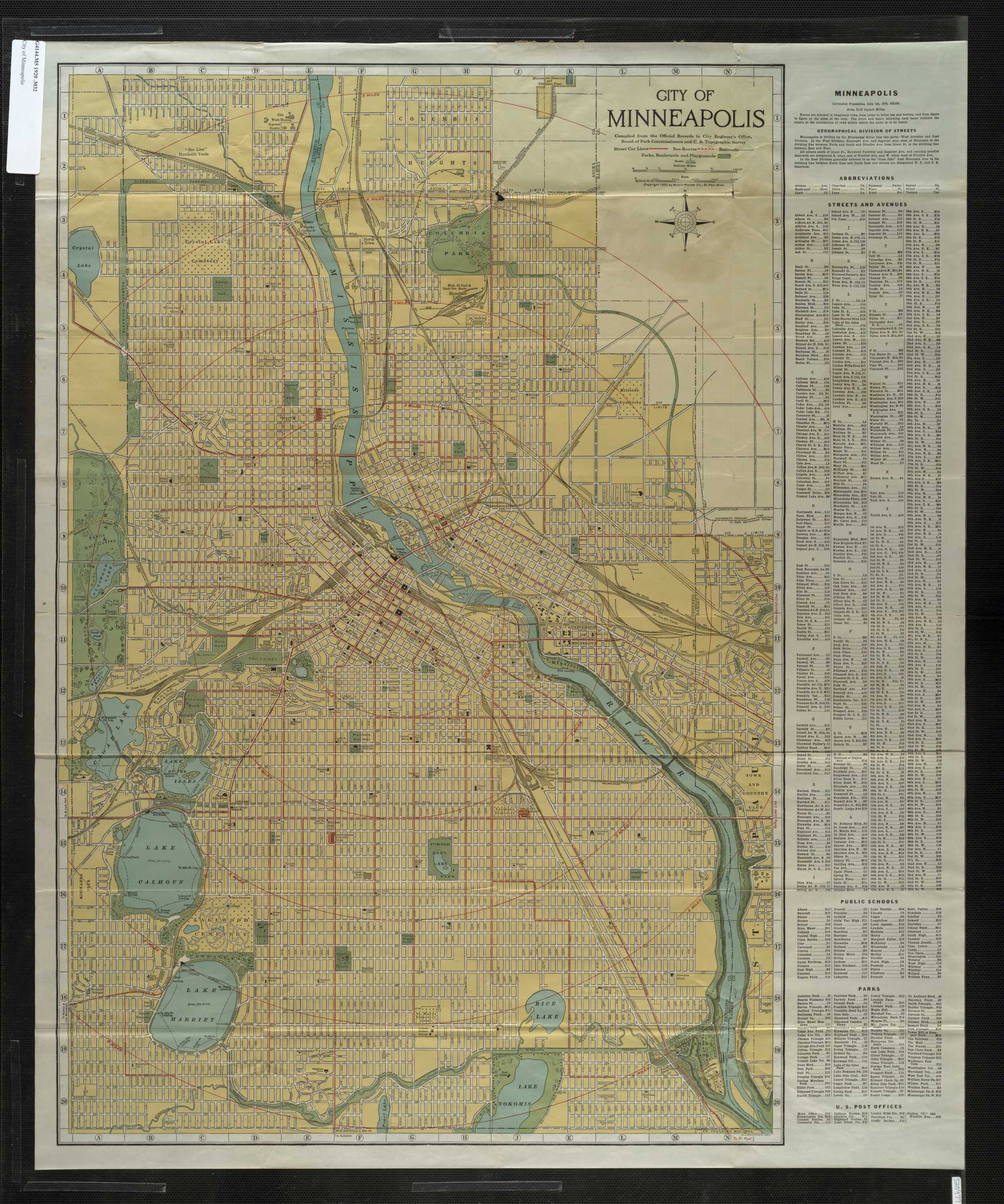
Seeing a map of Twin Cities' historic streetcar network goes a long way toward explaining the urban geography of the city. Most of the existing commercial corrdors, those places with the historic density, mixed-use nodes, and interesting old buildings are along the old streetcar lines. Even though the streetcars were all ripped up, burned down, and defunded over 50 years ago, there's a way in which they're still alive today.

[The streetcar map on the wall of Minneapolis Central Library.]


Some of the streetcar routes are pretty straightfoward. Others (like the old route through Minneapolis's) are crooked and confusing. Most have become bus routes, but a few of them have completely disappeared.

[The route in question.]
The old route to Willernie, White Bear Lake, and Stillwater is one of the latter. Together with Mark Brauer, a long-time East Side Saint Paul bicyclist, retired Mn-DOT planner, and amateur urban geographer*, we'll be tracing the old route of the Wildwood streetcar as best we can.

It'll be an adventure. Some parts of the route are completely gone. In other places, you'll be able to find it. And waiting at the end will be Willernie, a crazy East Metro town that used to be an amusement park and still feels like its at the the end of a long drive up to the cabin.
  • What: Bike ride to Willernie, along the old Stillwater streetcar line
  • When: Sunday August 2nd at 11:00AM. Shoudld take 2-3 hours, probably more depending on stops
  • Where: Meet at the corner of Payne and Edgerton, across from Yarusso's
  • How long: 25 miles round trip
  • How much: Free! (Or buy Mark or me a beer.)

Willernie is fascinating all by itself. Last summer, Andy Sturdevant, Steven Lang, and myself toured through it. Here's a bit from Andy's column:

Like so many Twin Cities neighborhoods — St. Paul’s Union Park, Lake Minnetonka’s Excelsior, the stretch of Longfellow once known as Wonderland — Willernie owes its odd footprint to an amusement park. Wildwood Amusement Park, another of the cities’ many trolley parks built to lure city dwellers out to the end of the lines for recreation, sat on the site from 1889 through the 1930s.


I've been looking forward to this ride for a while. If you're free Sunday, join in and explore the streetcar of your imagination.


PLEASE NOTE: The ride's pacing will be leisurely. I am not a speed demon and neither is Mark, who has an upright handlebar type bicycle. It'll be a relaxing ride befitting the pace of a streetcar and the idea of Wildwood bourgeois leisure.


[Wildwood spirits.]

[Willernie stop sign.]

[Willernie back roads.]

[Do you even know what this means?]

[Willernie main street.]


* As if there was any other kind.

2013-08-15

The All New Annotated Met Council "Streetcar Letter" to Minneapolis

[For original letter, see this article in the Pioneer Press. For previous parts of the "all-new annotated" series, see the annotated UMN "light rail" lawsuit, or these editions of the MPR Decoder

For a non-flippant actually-serious analysis of this situation, see my post on Streets.mn: Picking A Streetcar Fight with the Met Council is the Right Move for Minneapolis.]


July 12, 2013
Mayor R.T. Rybak
350 S. 5th St., Room 331
Minneapolis, MN 55415
Dear Mayor Rybak,
The City of Minneapolis is in the process of breaking new ground HAHA IT’S A PUN for the region’s transit system through its study of streetcar alternatives, in particular through the Nicollet-Central Transit Alternative Study. The City ... CHECK IT OUT, I’M GOING TO CALL IT “THE CITY” NOW, INSTEAD OF MINNEAPOLIS, LIKE IN A LEGAL DOCUMENT (PARTY OF THE FIRST PART, HERE TO FORE KNOWN AS “THE CITY”), AS IF MINNEAPOLIS IS THE ONLY CITY... has also taken the remarkable step of developing and seeking legislative authorization for a value capture funding source to help fund this project. Given the City’s active pursuit of a first-of-its kind modern streetcar project, I thought it would be helpful and prudent to outline the Metropolitan Council’s perspective on future development of this transit mode and regional investment. I.E. LOOK, I'M BEING HELPFUL. OOPS, JUST KIDDING... YOU’RE STEPPING ON MY TOES, MINNEAPOLIS.
The Council’s current Transportation Policy Plan (TPP) is nearly silent [CRICKETS] on streetcars as a mode of transit in the region, except for a reference to Council-local government collaboration to determine when and where a streetcar project might be appropriate.  KEY WORD HERE, MINNEAPOLIS, IS “COLLABORATION.” THAT MEANS WE SIT DOWN AND TALK AND THEN YOU PRETTY MUCH DO WHAT WE WANT. The TPP also states that projects that show a positive, significant, and cost-effective transportation benefit might be funded with local, regional and federal transportation funds, KEY WORDS: TRANSPORTATION BENEFIT, LIKE WHEN PEOPLE GO FROM PLACE TO PLACE. LIKE YOU KNOW EXAMPLES INCLUDE THREE LIGHT RAIL STATIONS IN A TINY CORNER OF BLOOMINGTON THAT NOBODY USES, OR A BRT LINE FROM THE MALL TO THE APPLE VALLEY ZOO OR LRT LINES THROUGH EMPTY PARKS, ETC but a project pursued primarily for development outcomes should be funded locally and should not compete with other priorities for federal and state transportation funds. THIS IS ABOUT THE MONEY, AND NONE OF OUR TRANSIT PROJECTS ARE FOR DEVELOPMENT, SEE? THEY’RE ALL ABOUT TRANSPORTATION, CALCULATED AND PRIORITIZED WITH THE GREATEST OF CARE TO TRANSPORT THE MOST PEOPLE MOST EFFICIENTLY WITHOUT MUCH THOUGHT OF DEVELOPING ANY LAND. With numerous transit corridors identified for future investment, the demand for transit capital and operating funding greatly exceeds current funding. I.E. WE’VE GIVEN YOU YOUR FRUIT BASKET, MINNEAPOLIS, AND WE NEED TO FOCUS ON PLACATING THE SUBURBS WITH LIGHT RAIL AND PROMISES OF AS-YET-NOT-SUCCESSFUL COMMUTER LINES.
Both transportation and economic development serve an important role in helping the region grow in an efficient, connected manner and provide justification for investment. I.E. ITS NOT LIKE WE’VE NEVER HEARD OF ECONOMIC DEVELOPMENT BEFORE… I understand that project justification for the Nicollet-Central streetcar is still under discussion by technical staff and policymakers as part of the Nicollet-Central Transit Alternatives Study. It will be important for the project justification to be well developed and vetted prior to it coming forward to the Council for consideration. I.E. … IT’S JUST THAT WE CAN’T TALK ABOUT IT EXPLICITLY IN PUBLIC FOR POLITICAL REASONS.
Work is just now beginning on the next regional TPP. I.E. ITS GONNA BE A WHILE. LIKE THREE YEARS. DON'T HOLD YOUR BREATH. We hope that the City of Minneapolis will play an active role in the development of the plan, allowing us to have a more robust regional discussion about the potential for developing streetcars as a transit option. I.E. WE’LL TAKE YOUR CALLS.
Because your project is proceeding more quickly than the next TPP, I feel it is important to proactively establish lines of communication and provide guidance on this project. SLOW DOWN THERE BUDDY, YOU’RE MOVING TOO FAST…
· Collaboration: Critical to the success of any project of this magnitude is collaboration between the Council and local units of government. ...DID I MENTION COLLABORATION YET? THAT MEANS WE MEET AND YOU AGREE TO STOP SQUEEZING OUR SHOES, OR AT THE VERY LEAST, TO GET IN LINE AND WAIT LIKE A GOOD LITTLE CITY. YOU CANNOT REPEL COLLABORATION OF THIS MAGNITUDE!...  In particular, if this project someday comes to fruition, we view it as critical that it be integrated into the existing transit system, regardless of how it is funded or which agency leads the implementation. LOOK, WE BOTH KNOW THAT WE’RE GONNA END UP RUNNING THIS THING. OUR DRIVERS, OUR LOGOS, OUR TRANSFER AND TICKET SYSTEM… It is necessary to include potential funding partners and other stakeholders (Hennepin County, MnDOT, Counties Transit Improvement Board) in this collaborative effort. COLLABORATION! It is also important for the City to understand that streetcars merit a regional discussion that results in a regional policy. As you are aware, the City of St. Paul is also actively studying a modern streetcar system and potentially looking to the region for policy guidance. LOOK AT SAINT PAUL. THEY’RE CALLING US. WHY AREN’T YOU CALLING US, MINNEAPOLIS? WHY YOU GOTTA BE LIKE THAT?

Funding: As our TPP states, funding for a project like this may be different depending on whether the project’s primary function is additional transportation benefits or development outcomes. At this point, both scenarios lack a clear funding strategy, such as those that have been used for light rail projects. I.E. GET THE FEDS TO PAY FOR HALF OF EVERYTHING AND HAVE A MONOPOLY ON STATE TRANSIT FUNDING. The Council anticipates that with any Locally Preferred Alternative forwarded for Council consideration, the City will also provide a funding plan that addresses both capital and operating costs and is consistent with the project’s primary function. KEY WORDS: OPERATING COSTS. The Council, the Counties Transit Improvement Board and the City should all be at the table when this funding plan is developed. The City should understand that if a streetcar does not provide a significant transportation benefit AND BY BENEFIT, WE MEAN MOVING PEOPLE TO AND FROM THE SUBURBS, the Council may not be able to prioritize the region’s limited transit funding for a project without a significant local contribution to both capital and operating costs. AGAIN I SAY, OPERATING COSTS. I.E. WE’RE NOT GOING TO RUN THIS STREETCAR FOR YOU UNLESS YOU PONY UP. The Council also appreciates the City’s efforts to support additional funding for transit that may OR MAY NOT expand the flexibility to include streetcar. WHEN WE SAY “APPRECIATES,” WE MEAN THIS IN THE MINNESOTA NICE SENSE OF THE TERM. LIKE, “I REALLY APPRECIATES IT WHEN YOU WASH THE DISHES RIGHT AWAY AFTER YOU MAKE A GIANT MESS IN THE KITCHEN.”

· Memorandum of Understanding (MOU): If the Council formally takes a position favorable to streetcars at some future point, the Council and the City of Minneapolis should seek to enter into a formal memorandum of understanding regarding the funding, design, construction, operation and maintenance of the proposed streetcar line. I.E. WE WANT THIS IN WRITING. While it is ideal for the Council to formally take a position on streetcar as a transit mode and on the prioritization of the many competing regional projects prior to entering into such a memorandum, we recognize that we may need to be flexible and utilize short term, limited scope memorandums between the time a Locally Preferred Alternative is adopted and the time the Council takes a formal position on street cars.  I.E. WE WANT IT IN WRITING NOW.

As you move through the Nicollet-Central Study and seek to recommend a Locally Preferred Alternative, I encourage the City to remain in regular contact with the Council. I.E. CALL ME! [MAKES TELEPHONE GESTURE.]

Cole Hiniker will function as your primary staff liaison. AND HE DOESN'T HAVE A SENSE OF HUMOR, CAPICE?.

This is an exciting possibility for our region and while there are many unresolved elements, the Council welcomes Minneapolis as an HYPER-active partner in the effort to expand transit options in the metro region. I.E. TAKE SOME RITALIN, MINNEAPOLIS.
Warmest regards, “SEND ALL MY LOVE TO THE MISSUS. YOU WOULDN'T WANT ANYTHING TO HAPPEN TO YOUR NICE FAMILY... [PATS MINNEAPOLIS ON THE BACK]”
Susan Haigh
Chair

CC:
Counties Transit Improvement Board
Mayor Chris Coleman, City of Saint Paul
Commissioner Peter McLaughlin, Hennepin County
Commissioner Charlie Zelle, Minnesota Department of Transportation OOPS, I FORWARDED THIS TO ALL THE PEOPLE WITH THE MONEY.

[The Met Council's pedestrian friendly office in downtown Saint Paul.]

2013-03-12

Quality Planning

[A crowded bus in Minneapolis.]
Today at Streets.mn, I put a new post up about some of the less tangible benefits of streetcars, things like ride quality, noise levels, and how traffic calming changes the feel of the street.

For example, here's the description of the acoustic experience of a streetcar vs. a bus:
Noise – The role of noise in cities is often overlooked. Our downtowns and neighborhoods are continually polluted by the sounds of combustion engines, and this daily harangue not only makes our streets unpleasant, but actually raises stress levels in strikingly unhealthy ways. Because they’re electric and run on rails, streetcars are quiet. The sound of a grunting diesel bus has a Pavolovian effect on me. That farting grumble instantly makes me more depressed. I feel like Charlie Brown on a bad day, slumping my shoulders and staring at my shoes. I imagine many others feel the same way.
Noise is one of those things that often gets lost in the way we think about planning our cities. We rely on statistics and models as ways to study efficiency. We like counting cars and measuring dollars, reducing our cities to quantities that can be stacked next to each other and graphed. Crime was down %2 this year. The average time spent in stuck traffic was 15 minutes, times 500 million trips equals 2.64 trillion dollars per year. Et cetera.

Noise, on the other hand, is what you might call a qualitative value. It joins a list of terms like "place," "walkability," or "architecture" in being vague and hard to measure. Compared to the hard numbers of traffic flow or assessed real estate value, qualitative concerns seem less important, so much icing on the urban cake. But at the same time, our actual experience of the city is composed of just these sensations. These qualitative values can make the difference whether we walk, trudge, or stroll. Sometimes everyday life is nothing but the sunshine on our shoes.

[Waiting for the bus in downtown Saint Paul.]
Riding the bus yesterday, I was reading through a short, smart book called Health and Community Design. I was struck by how public health studies about active transportation suggest the importance of qualitative factors. The authors, Frank, Engelke, and Schimid, write this about the "micro-economic perspective" that often governs transportation planning. Here's their long but interesting argument:
Another critique that can be leveled against the micro-economic perspective concerns its singular emphasis upon utility. Micro-economic theory logically requires a focus on individual calculations of loss versus gain, namely, the time and monetary cost involved in travel. Questions involved in the user's perception of the spaces in which travel occurs are dismissed almost entirely. The efficient movement of automobile traffic -- where efficiency is defined by high average speed and lack of traffic congestion -- has long been the standard amongst transportation engineers and many planners for judging the basic soundness of a transportation system. [...] It is assumed that the motorist, who exists in a metal and glass cocoon insulated from the surrounding environment, cares little about qualitative issues such as the aesthetics of the roadway and surrounding development. But to the non-motorists, the external environment has tremendous importance, directly influencing one's perception of the desirability of travel on foot or by bicycle.

This makes a lot of sense to me. A lot this comes down to the difference between the closed, private world of the automobile, and the open, public world of the city street. When you look at cars from above, it doesn't really matter what's going on inside them. One driver might be singing along to the radio, rocking out to some CCR. The next driver might be gritting their teeth, clenching the wheel, late for a meeting. The next might be totally relaxed, the next might be on the phone, the next might be wide-eyed after having just landed in the USA for the first time. Outside of road rage, it hardly matters. Qualitative concerns are irrelevant, taking a back seat to the number crunch of drivers.  

[A sidewalk on Minneapolis' Franklin Avenue.]
For walking and biking, it's a whole different story. Qualitative environments are everything. People will cross the street to be in the sunshine or to avoid an alley. People bike far out of their way to experience the intangible pleasures of a comfortable trail.

Frank et. al. end by arguing that, looking at the qualitative composition of a city, there's a zero-sum war waged between cars and everyone else:
The built environment can be highly pleasant, interesting, and safe or highly unpleasant, uninteresting, and unsafe for the non-motorist. It is not a stretch to claim that transportation systems and land use patterns that allow for efficient automobile movement are directly at odds with the interests of non-motorists, because the same environments that promote fast driving are almost always the environments that are unpleasant and unsafe for the walker and bicyclist.

To me, this argument is both convincing and scary. If environment matters little to cars, but is crucial for anyone else, and quantitative measures inherently struggle to perceive environmental factors, our cities are in trouble. It means that our predominant methodologies are by their very nature predisposed to create qualitatively alienating spaces. It means that the very language of efficiency and calculation undermines our social efforts to built sustainable and comfortable cities.

I hope I'm wrong. The alternative is trying to figure out how to accurately measure and assess qualitative values. We need to come up with numbers or values that can gauge comfort and the "feel" of a space. It seems an impossible task, but until we do, our indefinable streets will be getting the short end of the stick.


[Minneapolis sunset from the ped bridge over I-94.]