2011-12-09

*** Sidewalk Weekend! ***

Sidewalk Rating: Icy

Dear Concept Of Phenomenology In Architecture As Developed By The Norwegian Theorist Christian Norberg-Schulz,
My boyfriend is an avid bicyclist who rides his bike to and from work every day. Despite my direct pleadings for him to purchase a bike helmet, he has so far refused to wear one. He claims they look silly and are unnecessary if you're a good cyclist. How can I convince him to practice proper bike safety without him feeling like I'm "cramping his style"?
—Concerned in Cleveland

Dear Concerned,
Architecture (insofar as architecture is an art) should contain within it the potential for the revelation of that which is unknown. Changes in our physical environment, particularly in the structure of our cities following the Second World War, have resulted in a loss of a sense of place, as well as a subsequent "empty space" within our perceived experience of our world. This can only be remedied by a renewed sense of human settlements as urbanfoci, and of the role of architect as designer of meaningful sub-places where man can simultaneously experience individuality and belonging. A building is not merely a building but a shared spatial experience—a locality—that embodies and shapes the values of its environment and of culture as a whole. This is not merely a matter of identity in the sense of the development of local characteristics, but also of equality in fostering opportunity to play a part in a greater context. The lived experience of building materials and their sensory properties is, of course, paramount to achieving this understanding.

[Fm The Onion.]

[A tree leans out over the sidewalks of Wall Street in Lowertown, St Paul.]


*** CLICK IMAGES FOR LINKS ***


*** ***


*** ***


*** ***


*** ***


*** ***


*** ***


*** ***


*** ***


*** ***


*** ***


*** ***


*** ***


*** ***


*** ***


*** ***


*** ***


*** ***


*** ***

*** ***
*** ***


*** ***


*** ***


*** ***


*** ***


*** ***


*** ***
*** ***


*** ***


*** ***


*** ***


*** ***
*** ***


*** ***


*** ***


*** ***


*** ***


*** ***


*** ***


*** ***


*** ***


2011-12-07

The hidden benefits of the US Postal Service

[The post office in St Paul's St Anthony Park neighborhood.]
Recent discussions about reducing the US Postal Service have mainly taken place around issues of cost and delivery. For example, officials are discussing reducing service delivery to cut costs.

What's missing from the conversation, though, are people thinking about the role the US postal service, post offices, and letter carriers have in their neighborhoods. Many smaller post offices are true neighborhood hubs, serving as central spots in smaller commercial nodes. They are places where people can go to get passports made, to collect tax forms, or to mail packages. These smaller offices do a great deal to create neighborhood identity and to serve to increase walkability in their neighborhoods.

A great example of this is the post office in St Paul's St Anthony Park neighborhood. Despite being one of the ugliest most utilitarian post office designs in my living memory, this little office fits in really well with the surrounding building stock, and symbolically serves as the heart of the small commercial node in this area surrounding it.

In small towns, too, post offices are very important meeting places.

This is not to mention the fact that letter carriers are important links in their neighborhoods. Delivering mail every day, letter carriers are wonderful "eyes on the street", walking down every sidewalk in every city in America on a daily basis.

While we discuss the future of the US postal service, it's important to keep in mind how they function to create walkable, urban spaces in communities everywhere. Any discussion of the benefits of the US postal system that relies only on a spartan cost-benefit analysis is likely missing out on all the intangible benefits of the network of buildings and offices that provide a meaningful connection between the federal government, your local sidewalk, and your mailbox.

[Seeing the post office is comforting, like your favorite blanket.]

2011-12-02

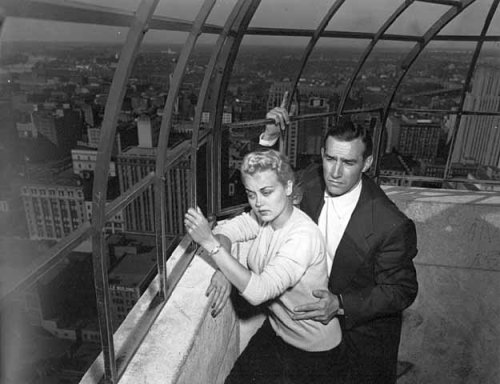
Classic Sidewalks of the Silver Screen #47

Phillip Marlowe finds a willing recruit for some sidewalk surveillance...

[Click on image for clip.]
... in Howard Hawks' (1946) The Big Sleep.

2011-12-01

Announcing the Winner of the U of MN Safety Campaign Motto Contest

After seemingly endless series of heated debates, much biting of nails and gnashing of teeth, the results are in for the 2011 Goldy T. Gopher Vehicular Bike-Slaughter Award for Best Fake Motto Generation.

And the winner, with a total of 10 votes: Andrew! aka S.O.T.A., who came up with the following suggestion...


[The new campaign motto in action.]


He will receive the coveted and highly flammable Goldy T. Gopher Motor Mania award, which should keep him warm during these cold winter nights. 

[The coveted Goldy trophy, fit for mantles or fires.]

Signs of the Times #44


AWARDS
BY HAMMOND
---->

PUMPKINS
<----

[Streetlight. University Avenue, St Paul.]


Something NEW
Is Coming
And It Has To Do Wtih
CHOCOLATE!

[Porch. Selby Avenue, St Paul.]


This is a 
Sign
NOT 
A Death Threat

[Lamppost. Downtown Minneapolis.]


Going Out of 
Business Sale

[Window. St Anthony Park. (See earlier version.)]

Browsing
Encouraged
[Sidewalk. St Anthony Park.]


Lost 
Cellphone
Cellulose

[Door. Dinkytown, Minneapolis.]

We Appreciat
Your Busi es

[Gas station. Selby Avenue, St Paul. (See earlier version.)]


Popcorn
Distribution
<----


[Field. Maple Plain. h/t Colin!]

Kelly D. Patrick
We have your
Wallet!

[Window. West Side, St Paul.]


LOANS FOR BETTER LIVING

[Building. Snelling Avenue, St Paul.]