2016-01-12

Six Suggestions for the Lake Elmo City Planner Job

Being a Lake Elmo city planner is a tough job. Put succinctly, it's like being the drummer of Spinal Tap, only it's not a joke.

See this Pioneer Press article from last summer:
Lake Elmo loses sixth City Hall staffer

The city planner of Lake Elmo has joined the exodus from City Hall.
City officials announced Friday that Nick Johnson was leaving, making him the sixth administrative employee to quit this year.
Several officials and employees have blamed the departures on their treatment by city council members.
"We are in a dire situation," said council member Justin Bloyer.
Mayor Mike Pearson said Johnson will be missed. "He and (planning director Kyle Klatt) have done a great job keeping all the moving parts in sync over the past couple of years," Pearson said.
Bloyer has put a price tag on the city's high turnover -- $250,000. That's the cost of the city's severance packages and the expense of finding replacements, he said.
Those who have left or will be leaving soon are: administrator Dean Zuleger, deputy clerk Beckie Gumatz, assistant city administrator Adam Bell, taxpayer relations manager Alyssa MacLeod and receptionist Stacy Bodsberg.

Or this description of a parking lot brawl between a City Council Member and a local reporter:
It was pushing midnight on Oct. 7 when Smith approached Stillwater Gazette reporter Alicia Ann Lebens. A council meeting had just wrapped up. Smith was supposedly chaffed about a previous story Lebens had written. According to an account written by Lebens after the incident, Smith aggressively confronted her "waving her hands at my face." 
"In her right hand were her car keys, and she had them near my face," she added. "I continued to step backwards." 
Lebens' system was reportedly so rocked by the encounter that she asked to be escorted to her car after future meetings.  
Mayor Mike Pearson was among those who witnessed the incident.
"It was shocking, unusual and telling to me," he told the Pioneer Press last fall.

(Or a thousand other examples going back for a generation.)

Anyway, that's the magic of job creation; they're hiring again in Lake Elmo!

Given the turnover and  office atmosphere that likely rivals that of The Martian, they might be having trouble finding suitable candidates. Here are some "outside the box" suggestions that might work out:

[Lone Lake Elmo citizen protesting the City Hall dysfunction.]


### A Norweigian blue parrot

Pros: Can teach it to say short phrases, like "no way, Jose!", "bullshit," or "Get out of here." Long lifespan. Beautiful plumage.

Cons: Poops a lot. If given chance, would quickly fly South to a warmer exurb.


### An "end times" street preacher

Pros: Impending apocalypse means minimal planning. Loud speaking voice ideal for public meetings. Can use complex sentences. Would bring "energy" to the job.

Cons: Unpredictable expenses. Risk of suicide cult.


### A bowl of petunias

Pros: Friendly demeanor would be a good change of pace. Quiet in the office. Minimal needs.

Cons: Seems like the only fate worse than plummeting repeatedly through the atmosphere with a sperm whale.


### Cryogenically frozen Ted Williams

Pros: Formerly great hitter. Kind of an asshole, reportedly. Would be intimidating. Implications of the "unfrozen caveman."

Cons: Very expensive. Could wreak havoc with the HVAC.


### Very small rocks

Pros: Highly portable, which comes in handy for community outreach. Might float. Cheap!

Cons: You can throw them, which seems like a bad idea.


### The Rock-a-Fire Explosion

Pros: Kids would love it. Offers just enough variety to fool some people. Nostalgic appeal.

Cons: Likely to be moldy. Takes up a lot of room in the office. Highly repetitive.


TC Sidewalks Live: Noteworthy Dive Bars of Outer Northeast Walking Tour

[Map is here.]
Enough dilly dallying. It's time for the big kahuna: Northeast Minneapolis, the heart of the great city's dive bar beat.

The dive bar landscape of Northeast is too large to tackle all at once, and so we explore it piecemeal, one leg at a time. First up, the "outer rim," a strip of dives along Marshall Avenue and points south that parallel the Mississippi like a fishing line. We will be proceeding Southward from the dive apex at Lowry Avenue straight down into the heart of Hennepin and Central.

Northeast is the mecca of working class industrial Minneapolis, the largest continual stretch of old school urban Catholicism, forming a fraternal twin to the more Protestant South

And, like the South Minneapolis' division, the Northeast Minneapolis alcoholic landscape has a stark geography. According to the city's "liquor patrol limits," full liquor establishments weren't allowed East of 4th Street or North of 29th Avenue. 

Thus Northeast's dive bars were contained to a small area alongside the riverfront crotch. This was ostensibly because this is the distance that the city's 19th century "liquor patrol" could efficiently walk from their downtown stations. (But everyone knew the restrictions stemmed from moralistic paternalism by city's economic and religious leaders.) That is why the wealth of the city's shrines to old school libation are as concentrated as an Otter rum and coke.

(Note: 4th Street and its rich vein of dives, along with striking cluster in the "seasonal" streets, are reserved for a future date.) 

A note on walking

This will be a walking tour. (Bicycles are welcome, of course, and faster, and may proceed at their own leisure.) I will be walking at a relatively brisk pace between the dive destinations, and the total distance covered will be about two (2) miles. 

Walking in winter is an exquisite pleasure, and you should try it. For folks who'd like a shorter route, you can always meet the tour at Stop #2: Dusty's at around 7:00 PM.


[Tony Jaros' marks the Northwest corner of Northeast's dive district.]

A note on defining "dive bars"


[The N.E. Yacht Club was named by off-duty Star Tribune reporters.]
The term “dive bar” is a grey bag, a mixed and mumbled blessing. Proper definition eludes, resting close to Potter Stewart’s rule of thumb: “I know it when I see it.” 

That said, just as a litmus test is not a black-and-white affair but a spectrum of acidity, you can train yourself to measure a dive. They are often more than the sum of its parts, qualities that seem singly  inconsequential but, when considered in composition, can come together for a moment or for an evening like rare jazz. (And can be just as excruciating when they go wrong.)


Here are some things to keep your senses in tune:


Windows - These are a minus. Dives eschew fenestration. What happens in the dive, stays in the dive.


Staff - Ideally, there's only one staff. Maybe someone works in the back. The more staff, the less divey.


Regulars - A must. When you walk into a dive, people should stop talking like in a wild west saloon and look at you a bit funny. Unless you are a regular, you really don't belong.


Daydrinkers -Yep.


[A broken scale at the Terminal.]
Pull Tabs - Yes please. Meat raffles are also good. Best is when there's a pot of some sort of free food sitting on a table.


Nonchalance - Dives can't be trying too hard to make money. If they are, they're not dives any more. No fancy menus. No fancy paint jobs, etc.


Cleanliness - No more than absolutely necessary.


"Craft Beer" - Nope, unless its brewed within a mile or two of the dive. If it exists, it's largely symbolic.


Food - Greasy or nothing. Heggie's Pizza is the hallmark of a dive.


No one or two of these things is a hard or fast requirement. but together these qualities create a spatial mood and social atmosphere. While the “neighborhood bar” remains a close cousin of the dive, the distinction is important; a true dive draws from a wider environment, which explains the typical parking lots of pickups. So too with former dives (gentrified). Cop bars and some gay bars might qualify, but really belong in other categorizations. While dive bars are not the right venue for purism, one does ask for some degree of discernment.


[The flying flag of Northeast.]
What: Walking tour of five dive bars in Northeast Minneapolis

Who: Anyone. Small donation requested, payable in beer upon arrival

When: January 28th, departing at 6:30

Where: Tony Jaros' River Garden

Why: Because it's there

How: Brief historical notes and discussions of each bar will be delivered upon arrival and/or departure. A pause for refreshment, then on to the next.


[See also: Noteworthy Dive Bars of South Minneapolis, Noteworthy Dive Bars of the Green Line, Noteworthy Dive Bars of Old Fort Road.]

2016-01-07

The Gas / Pop Metaphor

[Bendy tubes.]
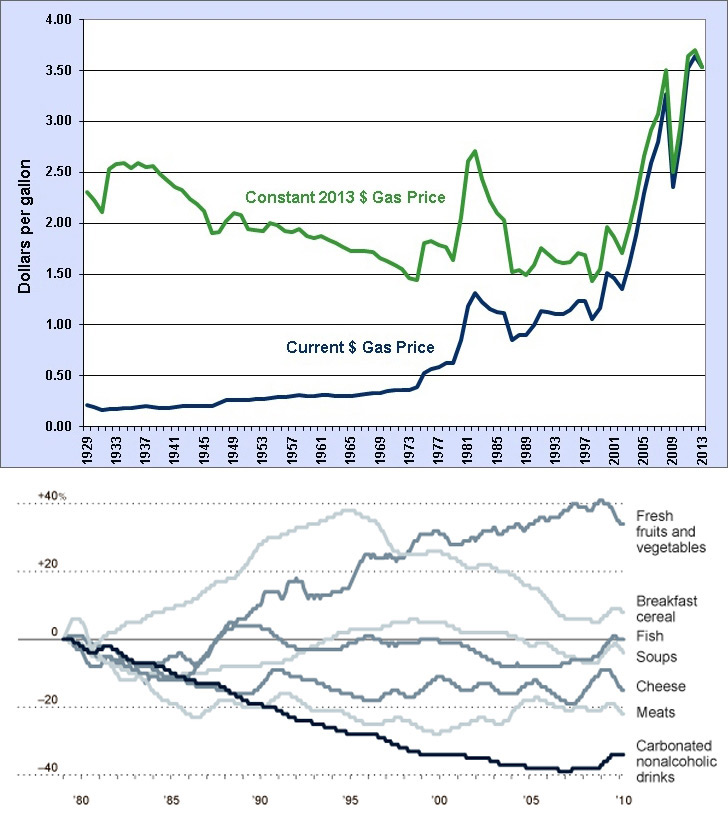
"If you like cheap gasoline, this January is the month for you!" says the headline this morning.*

The framing reminds me of the recent Marathon gasoline advertisement, and its unforgettable bluegrass jingle: "With a full tank of freedom, find your own highway, we'll take you wherever you go."

The ad features magic American flag fumes, nostalgic images of gas pumps, and a close-up of a young white woman sipping the straw of a big cup of soda.

[Mmmm. Good ol' pop 'n' gas.]

[Ouch.]
The mistake that we make in framing articles about "people who like cheap gasoline" is to think about gasoline as a consumer choice. Sure there are "types" of gas -- high and low octane, I suppose. And maybe in some earlier era, when gas was young, there were differences between gas companies.

Filling your car with gasoline is like paying your taxes. Everyone hates doing it, everyone must do it.** It's not a choice, it's a curse.

The other side to the metaphor is that both gasoline and soda pop are 20th century mass market productions tied deeply to vast cultural and material infrastructures. Both the gasoline in your tank and the corn syrup that's the #1 ingredient in a big gulp rely on cheap energy, exploiting vast acres of land, shady conglomerates, and heavy government subsidies. And for both, these pernicious supply lines are hidden behind a patriotic, nostalgic, and shiny façade.

[Billions of dollars and lifetimes of work to convince us there's a difference.]

[From the NYC soda pop wars of 2013.]
And both gasoline and soda pop are terribly bad for your individual health. For a long time our culture was willfully naive about the effects of cheap pop, putting machines in schools or making the "super size" option a default choice. But then diabetes began sweeping the nation like a bad dance trend, and a few places began pushing back. There's a long way yet to go.

And apart from cigarettes, the only thing worse for you than soda pop is gasoline. Even if you don't drink gasoline -- and don't drink gasoline -- driving everywhere keeps hundreds of millions of Americans from getting any exercise in their everyday lives.

It would be nice if we stopped talking about "people who like cheap gas." For most people, gasoline isn't a question of taste. It's simply the most visible piece of an environmentally destructive transportation system that desperately needs reform.

Gas isn't pop. Gas isn't fun. It's a boring bad habit.


[Only an idiot has fun at the gas pump.]


* It's another article about gas prices, and articles about gas prices are about as useless they come. Never once do any of them mention tax structure, subsidies, or global oil markets. To simply report the price of gas is like reporting on the blowing of the wind. You might as well be an inanimate sign.

** PROTIP: Once you get rid of your car, you never buy gas any more.

[Pop has gotten cheaper, gas more expensive.]

2016-01-05

Twin City Doorways #18

[Downtown, Saint Paul.]

[Southeast Minneapolis.]

[Location forgotten. Downtown Saint Paul.]

[West 7th Street, Saint Paul.]

[Midway, Saint Paul.]

[Downtown, Saint Paul.]

[West 7th Street, Saint Paul.]

 [Northeast Minneapolis.]


2016-01-04

Reading the Highland Villager #145

[Stack of Villagers just over the West St Paul border.]
[Basically the problem is that the best source of Saint Paul streets & sidewalks news is the Highland Villager, a very fine and historical newspaper. This wouldn't be a problem, except that its not available online. You basically have to live in or frequent Saint Paul to read it. Until this newspaper goes online, sidewalk information must be set free. See also: Three Reasons Why I Re-Blog the Highland Villager.] 


Headline: City loses champion of neighborhoods; Ward 2's Thune steps down after two decades on council
Author: Jane McClure

Short short version: A bio tribute to retiring CM Thune. Article includes history of Thune's career, paying especial attention to the Schmidt Brewery restoration and development, the smoking ban, gay rights, funding the Xcel arena, and [finally] Grand Avenue parking meters. [I didn't know that] Thune used to be a Republican! [CM Noecker takes over this week.]


Headline: West End worried about West 7th's transit future
Author: Jane McClure

Short short version: A transit line is being planned for the West 7th street area. Exact route and mode choice are up in the air. Neighbors are concerned about traffic and parking. CM Thune tried to get a motion passed that would "eliminate from consideration any transit options that would result in the loss of a traffic lane or a parking lane on W 7th St." It didn't pass. Article includes [rather heated] quotes from Thune and County Commissioner Ortega. Article includes quote from Pat Mancini [of Mancini's Char House] predicting an "uproar if parking is lost" because of light rail. Quote from Dan Cossetta [of Cossetta's parking lot] stating that "This is an already-built community; you can only put 10 pounds of stuff into a 10-pound bucket". [Best quote! Q: If Cossetta's "bucket" is overflowing, what exactly is it overflowing with?] The committee seems quite testy. There are public meetings next week.


Headline: Council sweetens 2016 city budget with $1.6 million in shifts. St. Paul's bottom line sees 4.3% growth in spending
Author: Jane McClure

Short short version: The city passed a budget. CM Stark says it "went smoothly." They'd like to find more money for library books. The city will spend $549 million dollars next year, which is more than last year. When the Grand Avenue parking meter plan was "dropped," there was a $400K budget hole. Article includes lots of details.


Headline: County, school boards to adopt maximum tax levies; School district ups its levy by 3.85%, county levies additional 2.8%
Author: Jane McClure

Short short version: Property taxes will pay for things.


Headline: St. Paul sets aside #330K to dig into organized trash collection
Author: Jane McClure

Short short version: Saint Paul is going to spend money to study whether or not to organize the currently "free-market" system of trash collection. There's a report by a neighborhood group detailing all the pros and cons of such a plan. Article includes quote from Frogtown woman about trash dumping, and from garbage haulers about how they're already trying to reduce their impact.


Headline: City passes on buying Riverside School
Author: Jane McClure

Short short version: The city didn't buy an old school off West 7th Street that's been vacant for a few years. [Why? Article doesn't say. Probably something to do with money.]


Headline: St. Paul agrees to put Penfield up for sale
Author: Jane McClure

Short short version: The city is going to sell a 250+ unit mixed-use apartment building downtown that it developed. It was originally going to be 40-stories tall, but got shrunk, and ended up costing $62M. [It's actually pretty nice now, and turned out to be a good move for the city. I'll bet they'll make money, even?]


Headline: Noecker brings considerable energy, host of ideas to new City Council post
Author: Kevin Driscoll

Short short version: Bio piece on the new Ward 2 City CM Rebecca Noecker. Article mentions the gender balance on the incoming council [See also here.] Article includes lots of biographic details, some laudatory quotes from co-workers, and list of Noecker's priorities: Riverview corridor, grants for small businesses, economic development, and jobs for teenagers. Also, guaranteed sick leave for workers and better transit. [Note that Noecker, a neighbor of mine, comes from the West Side, which is outside the Villager coverage area. *CUE KLAXONS* The closest hard copy of the Villager to our neighborhood is located a mile South, over the city border to West Saint Paul.]


Headline: New bike lanes, parking bay are in the works for Cleveland
Author: Jane McClure

Short short version: Article on the outcome of the [great 2015] Cleveland Avenue bike lane debate, reporting on CMs Tolbert and Stark's statement on plans to stripe the lanes and add a "parking bay" by the Randolph intersection. Exact budget, size, and location of bays still TBD. Article includes brief history of argument. Best quote from local neighbor upset by the "level of controversy": "the city can't have this level of chaos in the neighborhood." Quote from dogged anti-bike-lane property owner [who funded much of the opposition]: "I don't plan to stop until there is parking mitigation for everyone who needs it." ["Parking mitigation" = a pair of shoes.]


Headline: Council orders demolition of condemned building on Grand Avenue
Author: Jane McClure

Short short version: A run down two-story restaurant and apartment building -- and "Grand Avenue's oldest mixed-use building" -- will be demo'd because it's in such bad shape. It's located in a very attractive spot, right by Macalester College. The Heritage Preservation Commission wanted a delay to evaluate the possibility of rehab, but the council voted to tear it down. The building is from 1891. Article quotes city official stating that the property cannot be turned into a parking lot. [No doubt, that was everyone's first desire.]


Headline: Council supports financing plans to complete brewery's redevelopment
Author: Jane McClure

Short short version: The City Council approved plans to tweak a long-standing Tax Increment Financing district to include the Schmidt brewery, to allow some "left over" tax money to be used for rehab of the Schmidt brewery. The focus is on the "German-style rathskeller," the one-story building fronting West 7th street. It will have offices for firefighters and the local neighborhood group, in addition to a bar of some kind, [though it's unclear if it'll be open all the time or just rentable for events]. Also a separate TIF district will go toward the "keg house" which will be a "festival marketplace." [Hello 1980s! Seems like a lot of city money for a project that may or may not still need it, but whatever.]


Headline: West End site renamed Cossetta Park
Author: Jane McClure

Short short version: A small piece of park land has been renamed after noted Italian restaurateur family Cossetta, whose business started on the site back in 1911. [The famous business is now run by heir and West 7th landmark, liveable wage opponent, and parking lot aficionado Dan Cossetta.]


Headline: Landmark for Lowertown; Stolpestad writes history of Custom House, the old federal building his firm is redeveloping in downtown
Author: Dave Page

Short short version: Article on the history of a building that is being redeveloped on Kellogg Boulevard. The building has a unique history because of how it interacts with the river bluff. Half the building housed the post office, some went to US Customs,  and other parts were for other businesses. Quote from author/developer, on the amount of time it took to work with the city: "The city was very supportive; they're just understaffed right now." [This is something to keep in mind. City departments like Planning and Economic Development, and even Public Works, are fractions of their former size. They probably peaked in the 90s?] There will be 200+ "luxury apartments" there in addition to a Hyatt and other things like parking ramps.


Headline: [buried in the back of the paper for some reason] City lifts limits on full liquor service at restaurants; Council also redefines 'restaurant' to ensure they don't act like bars
Author: Jane McClure

Short short version: The City Council approved changes to the city charter to exempt restaurants from limits on liquor licenses. [See the previous Villager re-cap for more on this.] CM Bostrom, who had been the lone hold-out, changed his mind on the issue. Because of the change, CM Stark no longer has to make a new "commercial district" on the Western portion of University Avenue. [This seems like a huge step forward in decreasing bureaucratic red tape, which conservatives and urbanists should be in favor of. It will allow, for example, newer mixed-use buildings to more easily house restaurants.]